A bird carrying mud in its bill may be bringing home part of a wall, a floor, or a nest that will eventually enclose its entire family. Birds use mud in several ways. Some shape it into thick bowls or domes, while others use it to strengthen a nest made from grass and twigs.
The birds below include familiar backyard visitors and species found in South America and Australia. Each has its own building method, from attaching mud pellets beneath a bridge to shaping a cup on a tree branch.
1. Rufous Hornero, Also Called the Red Ovenbird
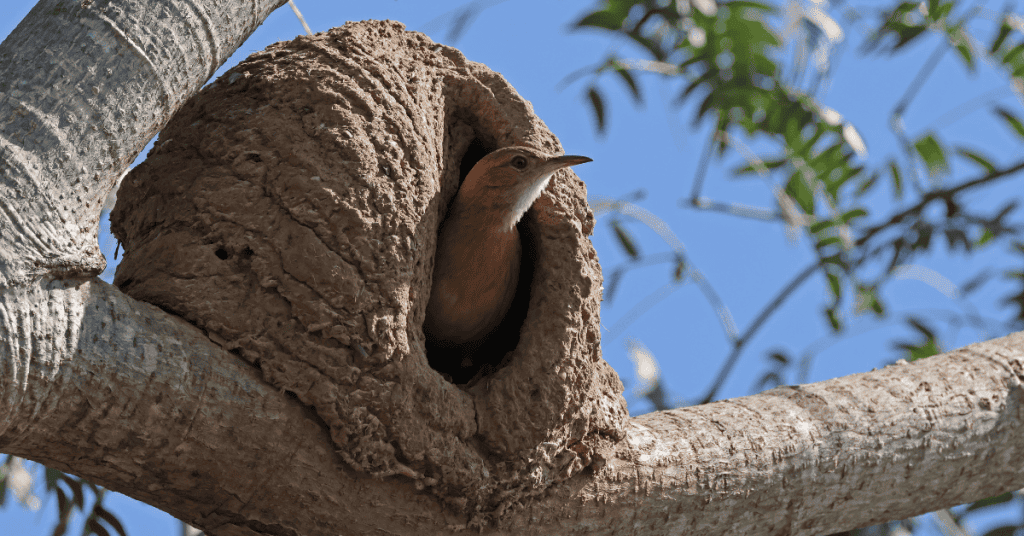
The Rufous Hornero is a rusty-brown bird found in Argentina, Uruguay, Paraguay, Bolivia, and Brazil. About the size of a European Starling, it often walks across lawns and open ground looking for insects.
Both bird parents will build a rounded mud nest that sure does look a lot like a small clay oven. They mix mud with plant material and place the nest on a sturdy support. Inside, a dividing wall separates the entrance from the chamber where the female lays two to four eggs.
Most pairs build a new nest each breeding season. Their old nests can remain intact for years and provide nesting places for other birds. Researchers have documented at least 29 bird species using hornero nests. Builders also share incubation and chick-feeding duties, and pairs often sing loud duets.
2. American Flamingo
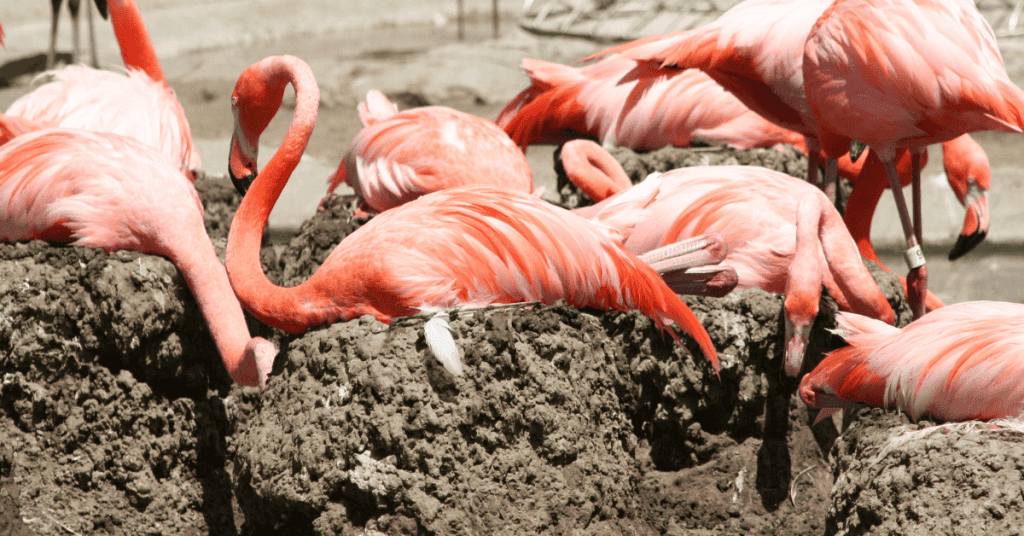
American Flamingos have pink to reddish-orange plumage, long legs, and a heavy, downward-bending bill. Babies are light-colored with no pink. They occur in Mexico, Cuba, the Bahamas, and Venezuela, usually in shallow saline or brackish water.
In Caribbean breeding colonies, both parents shape mud into a raised mound with a shallow hollow on top. Some of them are kind of large! This elevation keeps the egg above wet ground and helps it withstand changes in water level. Nest material varies by location; American Flamingos in the Galápagos may use stones and debris instead.
Females normally lay one white egg, and both parents incubate it for about a month. They generally raise one brood each breeding season, with rainfall and food availability influencing breeding.
Chicks hatch with pale down rather than pink feathers. Both parents feed them a nutritious liquid produced in their digestive tract.
3. Cliff Swallow
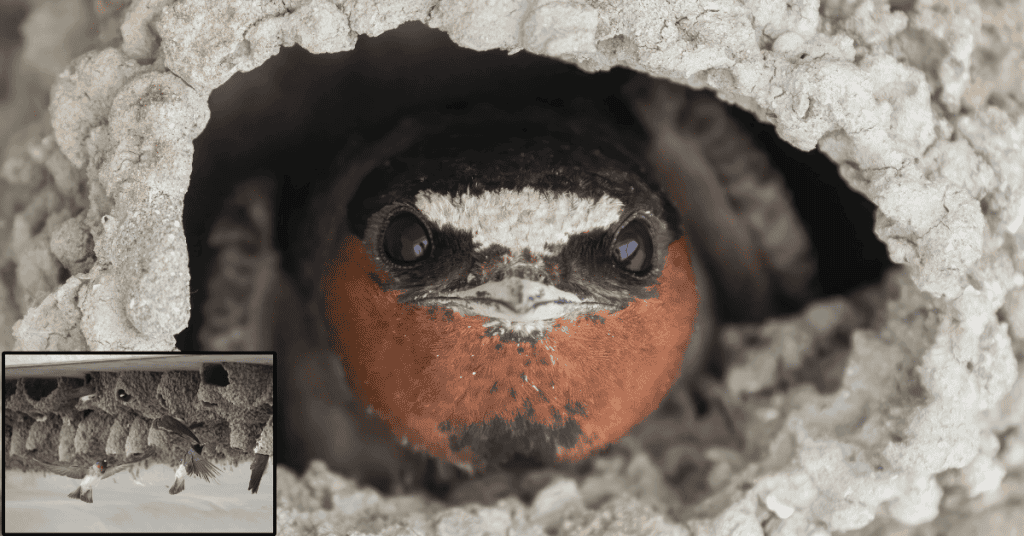
Cliff Swallows build the clustered mud nests that you might see beneath bridges and building overhangs. These small birds have dark blue backs, chestnut throats, buff-colored rumps, and short, fairly square tails.
Barn Swallows will have a reddish patch on the head, whereas the Cliff Swallows will have a pale forehead patch. This is so you don’t confuse them.
They breed across much of the United States and Canada, extending into Mexico, and migrate to South America for the northern winter.
Both parents collect mud pellets and press them into an enclosed nest with a small entrance. A finished nest can contain roughly 900 to 1,200 pellets. They line the inside with dry grass.
Pairs may build from scratch or repair an existing nest. Cornell lists clutches of one to six eggs and one or two broods per season.
These swallows catch insects in flight. Living in a colony can help with finding food: unsuccessful foragers sometimes follow more successful neighbors to feeding areas.
4. American Robin
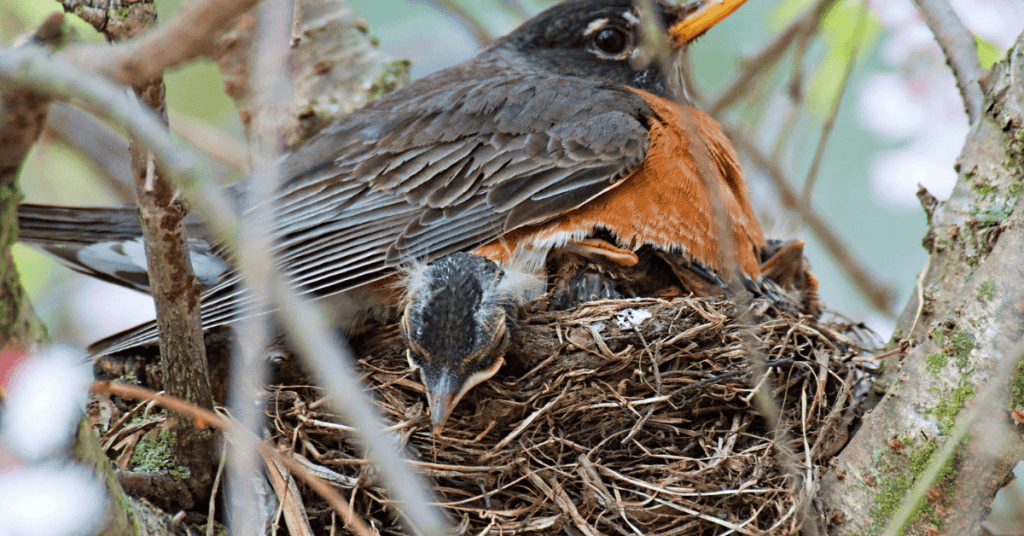
American Robins use mud in nests that may look mostly like grass from the outside. Most people don’t even know they use mud to build their nests!! Found across Canada, the United States, and Mexico, adults have gray-brown backs, orange breasts, and yellow bills. Young birds have spotted breasts.
The female shapes grass and twigs into a cup, reinforces it with mud, and lines it with fine, dry grass. That mud layer gives the nest a firm structure beneath its softer lining.
Robins usually build a fresh nest for each brood, although they occasionally refurbish an older one. They can raise to three broods in a season, laying three to five blue eggs per clutch.
Earthworms and insects are important foods during warmer months, but robins also eat plenty of fruit. In winter, birds that disappear from neighborhood lawns may be nearby in flocks around fruiting trees.
5. Black-billed Magpie
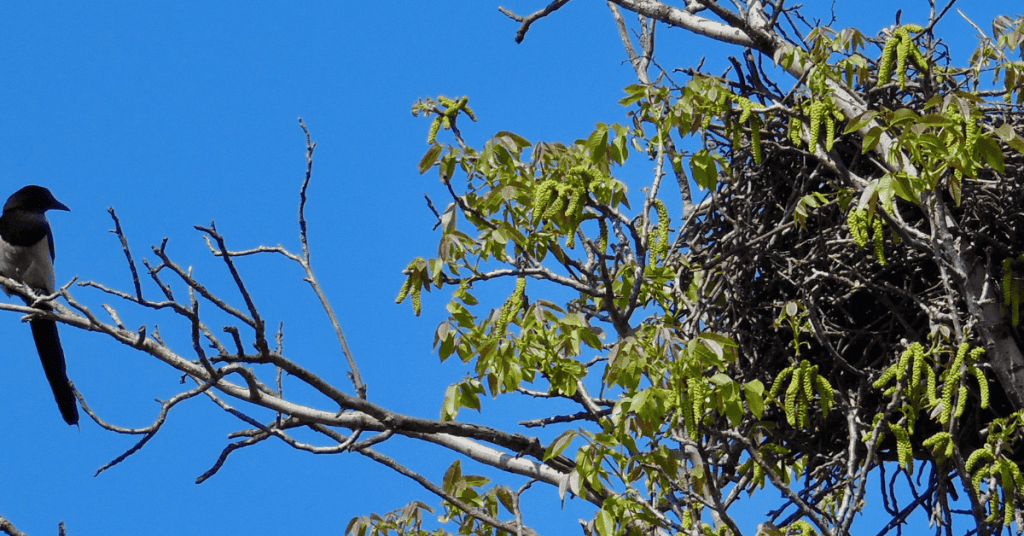
A Black-billed Magpie’s mud work is hidden inside a large stick nest. These birds live in western parts of the United States and Canada, including Alaska. Their black-and-white feathers, long tails, and blue-green iridescence help identify them.
Both birds contribute to the nest. The male gathers sticks for the exterior, while the female forms an inner mud cup and lines it with grass. A dome of sticks usually covers the top. Construction can take up to 40 days.
Pairs generally raise one brood annually, though they may try again after an early failure. Older nests are sometimes repaired and reused. The female lays around six eggs on average.
Magpies belong to the crow and jay family. They eat a wide variety of foods and often gather around carrion, making them scavengers as well as hunters of small prey.
6. Barn Swallow
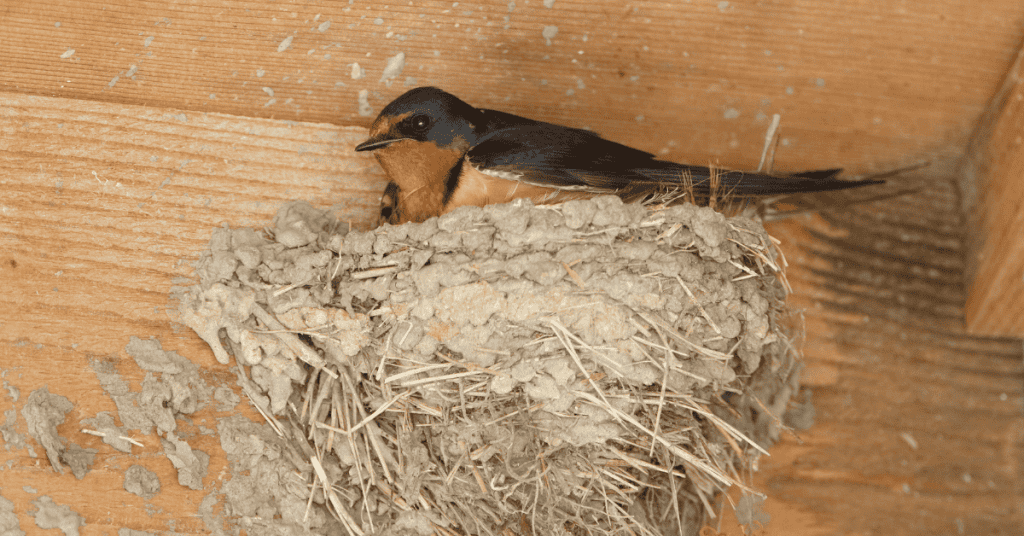
Barn Swallows have dark blue upperparts, rusty throats, and long, deeply forked tails. Their belly color varies depending on their origin. You can see them all over the world including the United States, Canada, and countries throughout Europe and Asia.
Both parents help out and use the mud mixed with grass to build an open cup, often on a beam or beneath a sheltered overhang. Grass and feathers line the inside. Unlike the Cliff Swallow’s enclosed structure, a Barn Swallow’s nest stays open at the top.
Pairs may reuse older nests, clearing out feathers and adding fresh mud around the rim. They lay 3 to 7 eggs and typically raise 1 or 2 broods.
Barn Swallows feed on flying insects, often sweeping low over fields or water. They can even drink in flight by skimming the water’s surface.
7. Eastern Phoebe
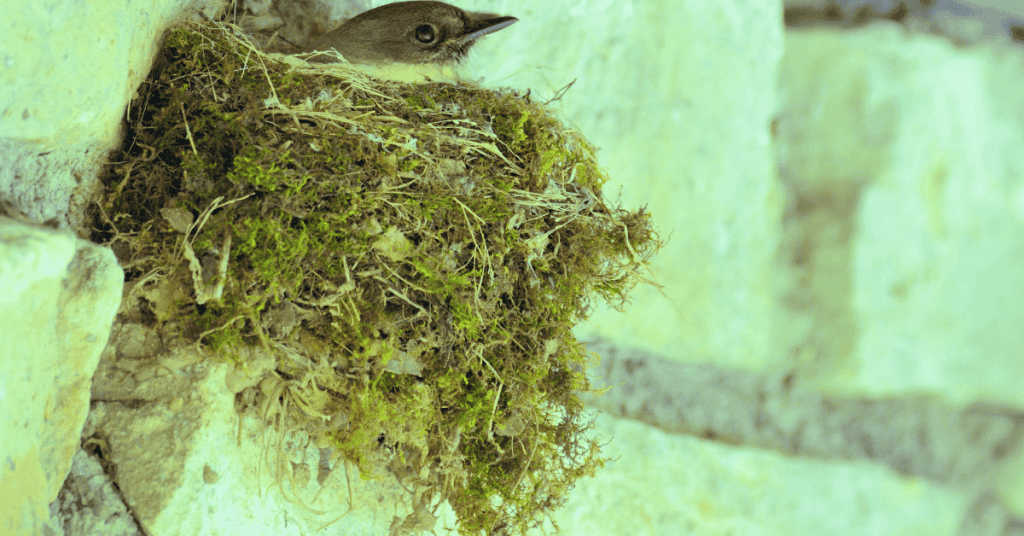
Eastern Phoebes are small, brownish-gray flycatchers with pale underparts. One cute unique feature is that they frequently wag their tails while perched. They breed in parts of Canada and the United States, with wintering birds occurring in the southern United States and Mexico.
The female builds a nest from mud, moss, leaves, and other materials. Sheltered ledges beneath bridges, porches, and rock overhangs provide the perfect spots! Construction usually takes five to fourteen days.
Phoebes often reuse their nests in later years. They may also renovate an old robin or Barn Swallow nest, and Barn Swallows sometimes use phoebe nests in return.
A clutch contains two to six eggs, and a pair can raise one or two broods. Adults hunt by watching from a perch and flying out to catch passing insects.
8. White-winged Chough
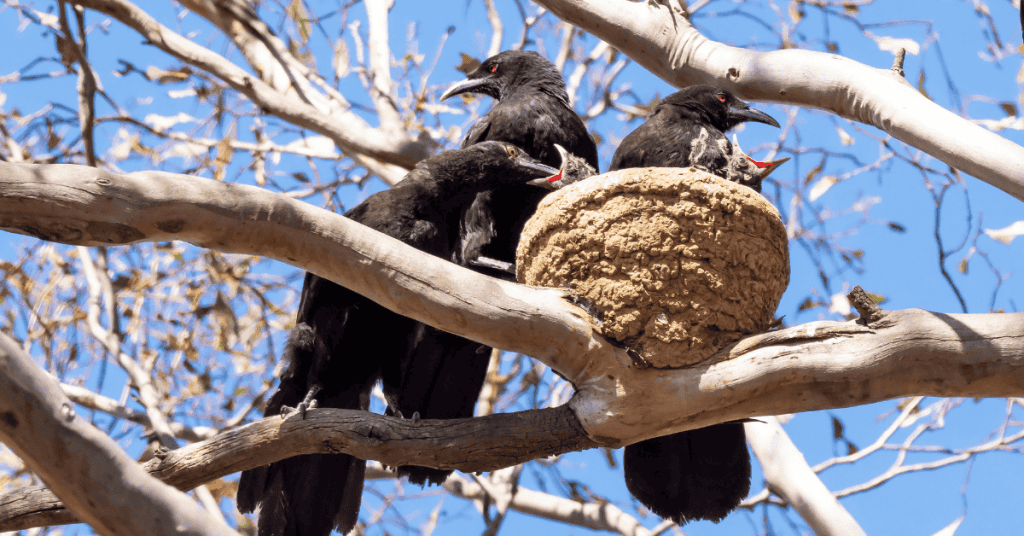
White-winged Choughs live in eastern and southeastern Australia. Adults are mostly black, with red eyes, curved bills, and white wing patches that are easiest to see in flight.
They build a large mud nest bowl on a horizontal tree branch. Construction may take many months when dry weather makes mud difficult to find. Some groups refurbish an older nest, particularly during dry periods.
BirdLife Australia lists a clutch size of two to five eggs. Raising the chicks is a group effort: young birds from previous seasons help with building, incubation, and feeding.
These social birds spend much of their time searching through leaf litter for food. When mud is unavailable, they have even been known to build with cattle or Emu dung. Nest construction depends on what the landscape provides.
9. Apostlebird
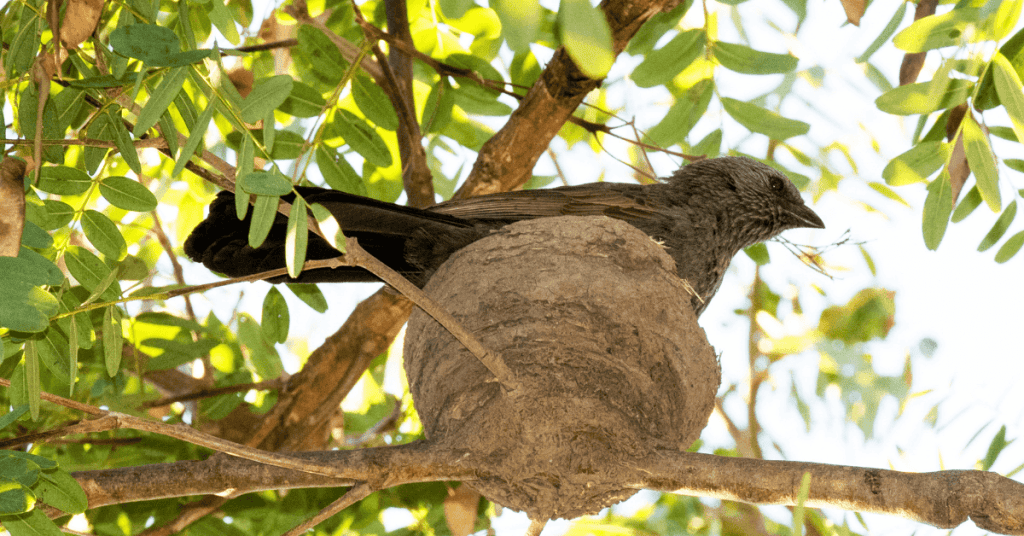
Apostlebirds are gray Australian birds with brown wings, dark tails, and short, strong bills. Their tail is longer, like the Black-billed Magpie. They occur mainly in inland eastern Australia, with an isolated population in the Northern Territory.
Family members work together to build a mud bowl on a horizontal branch, reinforce it, and line it with grass. Helpers also feed the chicks. More than one female may sometimes lay in the same nest.
Birds Queensland reports an average clutch of four eggs, with a recorded range of one to eight. Groups may raise two broods in a season.
Their name comes from the old belief that they traveled in groups of twelve, like the apostles. Actual group sizes vary. They forage together on the ground and often rest close together on branches, so their social reputation is well earned.
10. Magpie-lark
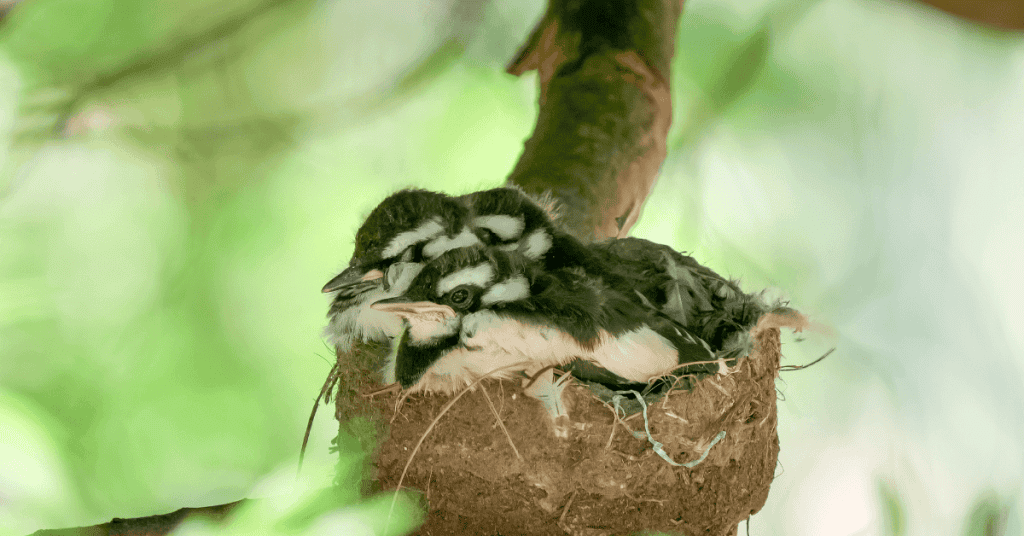
The Magpie-lark, also called the Peewee or Mudlark, is a black-and-white bird found across much of Australia. It is often seen walking across lawns, sports fields, and other open ground to find insects and other small invertebrates.
Both parents build a bowl-shaped mud nest, usually supported by a tree branch. Plant material reinforces the structure, and grass and feathers line the nest.
Females generally lay three to five eggs. Both parents incubate them and care for the young. When conditions are favorable, pairs may raise more than one brood in a year.
Magpie-larks can be forceful defenders of their nest and territory. The ordinary-looking bird walking across a playing field may have a carefully built mud nest in a nearby tree.
Do All These Birds Build a New Nest Every Year?
Nest reuse varies by species, some do and some don’t. Rufous Horneros usually build a new nest each breeding season, while American Robins commonly build a new one for each brood. Barn Swallows, Cliff Swallows, and Eastern Phoebes may repair and reuse existing nests.
The number of broods also differs from the number of nests built. Raising two broods does not necessarily mean constructing two separate nests. Weather, available building material, and the condition of an old nest all help determine how much work is needed.
From a robin’s reinforced grass cup to a hornero’s enclosed mud chamber, these nests show just how many ways birds can use a patch of wet earth.