Finding food in the winter can be tricky for wild birds. Natural food becomes scarce and energy needs increase in the cold. Setting up a feeding station in your yard helps these feathered visitors survive the harsh months. Plus, you’ll get a prime vantage point to watch their behavior.
The key to successful winter bird feeding is offering the right foods, keeping water available, and maintaining clean feeding stations that protect birds from disease and hazards. Simply tossing out bread or crackers won’t help and can even harm birds, since these foods lack the nutrients they need.
This guide will show you through everything from selecting high-energy foods and weatherproof feeders to placing stations safely and attracting different species to your yard. You’ll learn simple steps that make a real difference for birds while creating an active backyard full of life all winter long.

Key Winter Bird Feeding Tips
Winter feeding requires more than just tossing seed outside and wishing for the best. Birds need consistent food supplies during cold months, and avoiding common mistakes helps keep them healthy while they visit your yard.
Why Feeding Birds in Winter Matters
Birds face serious challenges when temperatures drop. Natural food sources become scarce or buried under snow, and birds must burn extra calories just to stay warm.
Winter bird feeding gives important sustenance during this tough season. Birds need high-energy foods to maintain their body temperature and survive freezing nights. A single winter storm can eliminate access to natural food sources for days or even weeks.
Your feeder might make the difference between survival and starvation for some birds. Year-round residents and northern migrants both rely on supplemental food when natural options run low. While birds do and can survive winter. Habitat loss from humans and development will reduce natural food sources. So this means they benefit more from your help than ever before.
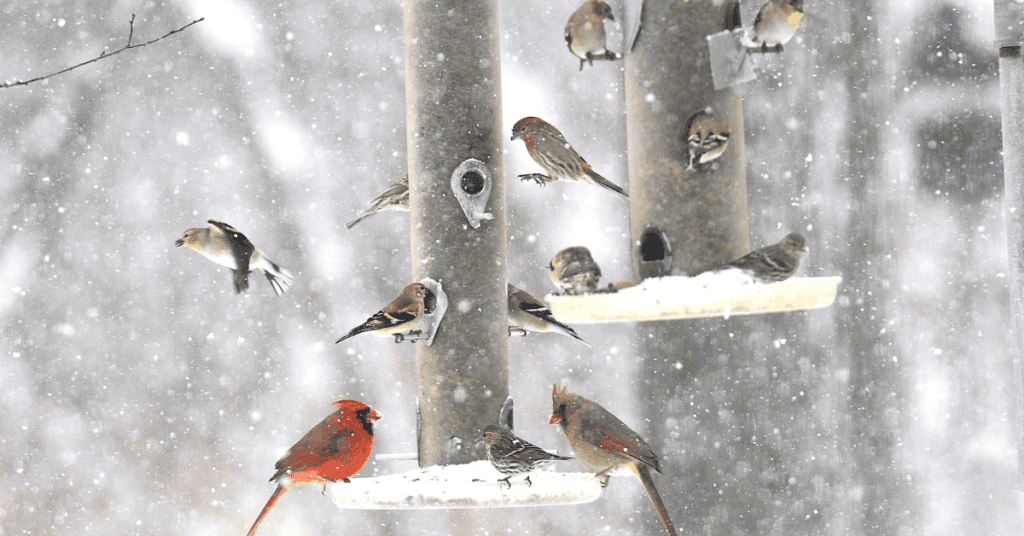
The practice also brings life to your yard. Cardinals, chickadees, woodpeckers, and jays add color and activity to dreary winter days.
Common Mistakes to Avoid
Never feed birds bread. It fills them up without providing the nutrients and calories they need. Birds that eat bread might feel full but will lack the energy to survive cold nights.
Cheap seed mixes with filler ingredients like milo waste your money. Birds toss these seeds aside as they search for nutritious food. Discarded seeds create a mess and can attract rodents.
Irregular feeding hurts birds that come to depend on your station. If you start winter bird feeding, commit to keeping feeders stocked throughout the season. Birds remember feeder locations and return regularly, so empty feeders force them to waste precious energy searching elsewhere.
Dirty feeders spread disease quickly. Clean your feeders at least every 2 weeks with warm water and dish soap. Wet weather or heavy use requires more frequent cleaning to prevent mold and bacteria growth.
Timing and Consistency

Start filling your feeders in late fall before the first freeze. This gives birds time to discover your feeding station while natural food remains available.
Keep feeders full throughout winter, especially during storms. Birds need reliable food sources when snow covers the ground and ice coats trees. Refill feeders before they empty completely so birds don’t waste energy visiting an empty station.
Feed birds at the same time each day if possible. Morning feeding is most important since birds need energy after cold nights. Evening feeding helps them fuel up before another freezing night.
Continue winter bird feeding into early spring. Late winter and early spring can be the hardest time for birds as their fat reserves deplete and natural foods haven’t yet emerged.
Choosing the Best Foods for Winter Birds
Winter birds need foods that pack a serious energy punch to survive cold temperatures. So some people go straight to suet, but the right mix of high-fat seeds, protein-rich suet is important. Specialized treats can make the difference between a thriving backyard flock and hungry visitors struggling to get through harsh weather.
High-Energy Foods and Their Benefits
Birds burn through calories fast when temperatures drop. Their bodies work overtime to stay warm, so they need foods rich in fat and protein to help them survive.
Black oil sunflower seeds are your best all-around choice. These small seeds have thin shells that birds crack easily, and they contain about 40% fat content. Cardinals, chickadees, finches, and nuthatches will visit your feeders regularly for these energy-packed seeds.
Suet provides pure fat that birds desperately need in winter. You can buy it at most grocery stores or make your own. Woodpeckers, chickadees, and nuthatches eagerly eat suet, especially when snow covers their usual food sources.
Peanuts offer a high amount of both protein and fat. Jays, woodpeckers, and chickadees love them. You can offer peanuts in the shell for jays or shelled for smaller birds. Peanut hearts work well, too, and attract many species.
Selecting the Right Seeds
Not all seeds work equally well for winter feeding. You want seeds that give birds maximum energy without waste.
Black oil sunflower seeds beat striped sunflower seeds every time. The black oil variety has higher fat content, less shell waste, and appeals to a wider range of bird species. Buy these in bulk to save money and keep your feeders stocked.
Nyjer seed (also called thistle) attracts finches like goldfinches, purple finches, and pine siskins. You’ll need special tube feeders with tiny ports for Nyjer since the seeds are so small. This seed costs more than sunflower seeds but attracts beautiful finches that other seeds won’t.
check out our affiliate links where we earn a small commission if you purchase an item.

- 【SQUIRREL-PROOF】 - It has no wood and no plastic, it’s all metal! The wire mesh design features a powder-coated finish to resist rust, while the sturdy metal construction will help thwart squirrel damage to help you save a lot of bird feeding costs.
- 【LARGE CAPACITY】 - Holds up to 2.5 lbs of seeds. It could be filled with nyjer/thistle seeds to attract finches, such as Goldfinches, Chickadees, House Finches, Bullfinches, Titmice, Sparrows, Nuthatches and more!
- 【EASY TO REFILL & CLEAN】 - No assembly required and does not require any tools to gain access to the inside for cleaning or refilling seed. Simply twist-off top or base, and fill with thistle seeds to attract birds to your garden.
- 【GREAT FOR CLINGING & PERCHING】 - The mesh makes the perfect landing place for clinging, while 360-degree seed tray encourages perching.The diamond-shaped mesh surface and circular perch create an all-over dining area to accommodate several finches at once.
- 【GREAT GIFTS CHOICE】- A sweet gift for parents, children and friends; A bird watching gifts for people who love birds and gardening; A unique gifts for Birthday, Valentine's Day, Mother's Day, Halloween, Thanksgiving and Christmas.
I always look for seed blends that don’t have a lot of filler grains. If it does have a lot of filler the birds will likely toss this to the ground. Which creates a big mess. The KAYTEE brand offers mixes with at least 50% sunflower seeds. Definitely avoid blends heavy in milo or wheat. The last thing you want is a bunch of other pests, like roaches and mice, foraging on the ground.
Although ground-feeding birds like sparrows, catbirds, and juncos will eat millet and cracked corn you scatter below feeders. You can also look for a specific blend if you have a particular bird in mind, like this blend will attract cardinals.
When to Offer Suet and Mealworms
Suet works best in cold weather when temperatures stay below 50°F. It’s important to note that warm weather turns suet rancid and messy. Put out fresh suet cakes in late fall and keep them available through early spring.
Place suet feeders on tree trunks or poles where woodpeckers can cling vertically. The cage-style holders work well and keep starlings from eating all your suet at once.
Mealworms give birds protein when insects hide or die off in winter. Bluebirds, chickadees, and wrens eagerly eat these treats. You can buy dried mealworms (cheaper and easier to store) or live ones (more expensive but more nutritious).
Offer mealworms in small dishes or specialized feeders during the coldest weeks. Mix them with berries for birds like waxwings and robins that prefer fruit. A little goes a long way since mealworms pack concentrated nutrition.
Selecting Feeders for Cold Weather
Cold weather demands feeders built to handle snow, ice, and freezing temperatures while keeping seed dry and accessible. The right feeder types and materials make winter feeding easier for you and safer for birds.
Tube Feeders Versus Platform Feeders

Platform feeders deliver versatility but need extra attention in winter. They attract a more diverse range of birds, including cardinals and jays that prefer open feeding areas. However, seed on platform feeders gets wet quickly during snow or rain.
Choose platform feeders with mesh bottoms that allow water to drain. Add a wide roof that extends several inches beyond the feeding area to keep precipitation off the seed. You’ll need to clean these feeders more often than tube feeders.
Advantages of Suet Feeders
Tube feeders work well in winter because their enclosed design protects the seed from snow and moisture. Look for models with metal ports and bases rather than plastic versions that can crack when temperatures drop below freezing. The narrow openings help keep the seed dry even during storms.
Suet feeders provide high-fat food that helps birds to maintain body temperature during cold nights. These simple cage-style feeders resist winter weather better than most seed feeders because they hold solid blocks that won’t freeze together or get soggy.
Woodpeckers, nuthatches, and chickadees rely heavily on suet during winter. The rendered fat mixed with seeds or nuts delivers concentrated energy that helps birds survive harsh conditions.
Mount suet feeders on tree trunks or hang them from branches, where they’re protected from direct sunlight. This prevents the suet from melting amid unexpected warm spells. Metal suet cages last longer than plastic versions and won’t become brittle in extreme cold.
Ground-Feeding Options

Many winter birds prefer eating at ground level, including juncos, sparrows, and doves. Simple platform feeders raised 3-4 inches off the ground keep seed above snow while still accommodating ground-feeding species.
Use feeders with mesh bottoms that prevent seed from sitting in melted snow or ice. Clear snow from around ground feeders after storms so birds can easily access food. Position these feeders under dense evergreen trees where natural cover reduces snow accumulation.
Scatter seed directly on cleared patches during severe weather when birds need quick energy. Move ground feeding locations every few weeks to prevent wasfte buildup.
Feeder Materials and Weather Protection
Metal components last longer than plastic in freezing conditions. Look for feeders with metal perches, ports, and hanging hardware that won’t crack or break during temperature swings.
Recycled plastic and treated wood resist moisture damage better than untreated materials. These weather-resistant options handle repeated freeze-thaw cycles without warping or splitting.
Choose feeders with these protective features:
- Wide roofs that go beyond feeding ports
- Drainage holes at the bottom to release moisture
- UV-resistant materials that won’t degrade in winter sun
- Removable parts for easy cleaning
Hopper-style feeders with large seed capacity reduce the frequency of refills during harsh weather. The covered design protects the seed from wind-driven snow, while the roof prevents ice buildup on feeding ports.
Feeder Placement and Setup Strategies
Where you position your bird feeders can make the difference between a thriving feeding station and an empty one. The right setup protects birds from predators and windows while giving them easy access to food throughout winter.
Safe and Optimal Locations
Place your feeders at least 10 feet away from bushes, trees, and other cover where predators like cats might hide. This distance gives birds enough space to spot danger and escape if needed. At the same time, position feeders within 20-30 feet of trees or shrubs so birds have a quick retreat option when they feel threatened.
It’s better to put feeders in areas of your yard with natural protection from harsh winter winds. Think, near a fence, building wall, or evergreen trees can shield birds from cold gusts while they eat. Also, sunny areas help prevent seeds from getting damp and moldy. Plus it may keep water sources from freezing as quickly.
Create multiple feeding stations across your yard instead of clustering everything in one spot. Not only does this approach decrease crowding. But it also gives shy or smaller birds a chance to eat without competing with aggressive species.
Feeders at Varying Heights: Birds Have Preferences
Different bird species inherently will want to feed at different heights. When you set up feeders at ground level, mid-height (3-5 feet), and higher positions (6-8 feet), you’ll attract the widest variety of birds to your yard. This is all about maximizing your chances of attracting cool birds.
Some birds naturally forage on the ground, and low platform feeders appeal to species like juncos, sparrows, and mourning doves. Tube feeders mounted at medium height work well for chickadees, finches, and nuthatches. Higher feeders attract woodpeckers and other birds that feed in tree canopies. But these higher feeders may be harder to maintain and clean, especially if you need to get a ladder out to do it! So we suggest starting with feeders that are easy for you to get to.
Each feeding height creates its own mini-ecosystem, helping prevent territorial disputes. Birds that might fight over a single feeder will peacefully coexist when they can choose their preferred feeding level.
Minimizing Predators and Window Collisions
Window strikes kill millions of birds each year, but proper feeder placement can help prevent them. Position feeders either very close to windows (3-4 feet away) or much farther back (at least 30 feet). Birds won’t build up enough speed to hurt themselves at close distances, and distant feeders give them space to move safely.
Add visual markers to your windows using decals, screens, or tape to help birds recognize the barrier. External window films work better than internal decorations because they’re more visible from the outside.
Keep the ground under your feeders clean to avoid attracting rodents that might draw predators. More importantly, remove spilled seed and hulls weekly to prevent mold growth. Doing this will also lower pest activity around your feeding stations.
Maintaining a Healthy Feeding Station
While nobody wants extra chores, these are a must! Keeping your feeding station clean and organized protects birds from disease while making sure they get the nutrition they need. Regular maintenance, adequate waste management, and a consistent feeding schedule create a safe environment for your winter visitors.
Bird Feeder Cleanliness Practices
Clean your feeders at least every two weeks. Take them down, empty all leftover seed and debris, then wash thoroughly with warm water and dish soap.
In wet weather or during heavy use, clean them more often. Feeders can spread disease among birds when droppings, mold, or spoiled food accumulate. Rinse feeders completely after washing and let them dry before refilling.
Check peanuts and other foods regularly for mold, especially after rain or snow. Moldy peanuts contain toxins that can sicken birds. Remove any wet or clumped seed immediately.
Scrub the ground beneath your feeders weekly to remove seed hulls and droppings. This area can become a breeding ground for bacteria if overlooked.
Managing Snow and Waste
Clear snow from platform feeders after each storm so birds can access food easily. Shake snow off covered feeders to prevent ice buildup that blocks feeding ports.
Seed hulls pile up quickly under feeders during winter. Rake or sweep this area weekly to prevent waste from smothering your lawn. Using hulled sunflower seeds greatly reduces mess, though they cost more per pound.
Move feeders to a different spot each season to give the ground beneath time to recover. Heavy feeding activity compacts soil and creates bare patches.
Place a tray or platform under hanging feeders to catch spilled seed. This keeps your yard cleaner and gives ground-feeding birds like doves and sparrows easier access to food.
Establishing a Bird Feeding Routine
Stock your feeders at the same time each day, so birds learn when to visit. Early morning works well since birds need to replenish energy after cold nights.
Pay attention and keep your feeders filled consistently throughout winter, especially during storms. Once the neighborhood birds discover your feeding station, they’ll rely on it.
If you check food levels daily, you can refill them before they run completely out. One trick I do is to add small amounts more frequently rather than overfilling it. Overfilling it can lead to spoilage, especially if the birds only visit occasionally. Track how quickly birds consume different foods, so you know how much to put out.
Providing Water and Shelter in Winter
It’s true that fresh water becomes scarce when temperatures drop below freezing. So birds will search for a reliable place to escape the wind and cold. A heated bird bath keeps water within reach. And brush piles and roosting boxes provide safe places for birds to rest.
Choosing a Heated Bird Bath
A heated bird bath solves the biggest winter problem for birds: frozen water. Search for models with built-in thermostats that turn on automatically around 35°F. These units keep water just above freezing without wasting electricity.

- YEAR-ROUND BIRD BATH: Enjoy birdwatching in every season with this deck-mounted heated bird bath. Keeps water open and accessible to birds during winter while providing a refreshing bath in summer.
- LARGE, SAFE DESIGN: 18.5" diameter basin with a 2" depth offers ample space for birds to drink and bathe safely. Shallow, gently sloping design ensures comfortable use for small and large species alike.
- THERMOSTATICALLY CONTROLLED HEATER: Built-in 150W heating element automatically operates only when temperatures drop near freezing, maintaining water just above freezing without overheating.
- SUB-ZERO TESTED DURABILITY: Basin is fully tested in sub-zero conditions and will not crack or shatter, ensuring reliable performance through even the coldest winters for many years of use.
- INCLUDES WATERTIGHT CORD CONNECTOR: Comes with a Farm Innovators outdoor cord connector to safely join power cords, keeping electrical connections sealed and protected from moisture.
Place your heated birdbath on a stable surface near feeders, but about 10 feet away from dense shrubs. You want to give the birds a clear line of sight to watch for predators while they drink.
Check the power cord for an outdoor rating, and plug it into a ground-fault circuit interrupter (GFCI) outlet. This prevents electrical shocks if water splashes onto the cord.
Depth matters too. Birds prefer shallow baths of 1 to 2 inches deep. If your heated bird baths are deeper, add flat rocks to create shallow areas. This will make sure those smaller birds feel comfortable.
DIY Solutions for Fresh Water
You don’t need to buy a heated bird bath to keep the water fresh all winter. A simple trick works well: place a dark-colored pan of water in direct sunlight. Dark surfaces absorb more heat and keep water liquid longer on sunny days.
I know this might be a lot for some, but we recommend replacing the water twice daily. You will get more backyard visitors if the birds always have access to fresh, unfrozen water.
This is a do at your own risk option: a small aquarium heater in a deep bowl. Wrap the cord with electrical tape at the connection point and keep it away from landing areas.
You can also float a tennis ball in your regular bird bath. The ball’s movement from wind breaks up ice crystals before they fully freeze the surface.
Birds Like Shelter for Extra Protection
We all know that natural shelter disappears when trees lose their leaves. Thinking outside the box you can fill this space by stacking pruned branches into a loose pile 3 to 5 feet high. Space logs at the bottom to create tunnels where birds can escape the wind.
Evergreen trees and shrubs provide year-round cover for birds. Plant them in clusters rather than single rows to block wind from multiple directions.
Leave dead flower heads standing through winter. Coneflowers, black-eyed Susans, and sunflowers provide seeds plus hiding spots between the dried stalks.
Roosting boxes work differently from birdhouses. They face downward to trap rising body heat, with multiple entrance holes and interior perches. Mount them 10 to 15 feet high on tree trunks or poles, facing away from prevailing winds.
Bird Species Attracted to Winter Feeding

Different bird species have different feeding habits and food preferences during winter. Knowing which birds visit your feeders and what they like to eat helps you attract more variety to your backyard.
Chickadees and Titmice
Chickadees and titmice are among the most reliable winter visitors. These small, energetic birds stay active even in freezing temperatures. They love black oil sunflower seeds, suet, and peanuts. Knowing what food each species prefers will help.
You’ll notice these birds grabbing one seed at a time and flying off to eat it elsewhere. There have been many studies on Chickadees and their spatial memory. They stash extra food in tree barks and then remember all the spots where they stashed it. Doing this has helped them adapt and survive cold nights, without having to migrate south. Both species prefer hanging feeders but will also use platform feeders if they must.
Black-capped chickadees are common in northern areas and stay over winter. And the Carolina chickadees will usually appear in the south. Tufted titmice look similar to chickadees but are slightly larger with a pointed crest on their heads. These birds are social and often feed in small flocks with other species.
Cardinals, Jays, and Juncos
Cardinals are easy to spot with their bright red feathers and black face masks. Males are vivid red, while females are tan with red highlights. They prefer sunflower seeds, safflower seeds, and cracked corn. Cardinals typically feed in the early morning and late evening, but this is not always the case.
Blue jays are larger, loud, bold birds with striking blue and white feathers. You can’t miss them. They eat peanuts, sunflower seeds, and suet. Some birders don’t like Jays because they can be aggressive at feeders, often scaring away smaller birds.
Dark-eyed juncos are ground-feeding birds that prefer millet and other small seeds scattered beneath feeders. These small gray birds with white bellies arrive from the north as winter begins. Clear snow from feeding areas to help juncos find food easily.
Woodpeckers and Other Species
Woodpeckers are winter regulars that cling to feeders and trees while eating. Downy woodpeckers and hairy woodpeckers visit most often. They love suet, peanut butter, and black oil sunflower seeds. Their strong beaks let them crack tough shells that smaller birds can’t open.
Red-bellied woodpeckers and northern flickers also appear at winter feeders. Suet cakes hung from tree trunks or placed in special suet feeders work best for these birds.
Other common winter visitors include nuthatches, which walk headfirst down tree trunks, and goldfinches, which prefer niger seeds in tube feeders. Sparrows and finches also gather at feeders, especially when snow covers natural food sources. Supplying a variety of food types at different heights attracts the widest range of species.