They’re round. They’re fast. And they sound like they’re whistling “chicka dee dee dee dee” from the treetops. The Black-capped Chickadee (Poecile atricapillus) is one of the cutest birds you’ll ever spot in a backyard or forest edge. Weighing just 10 to 14 grams, about a third the size of a European Starling, they’re tiny but bold, often flitting in close even when you’re near.
With their black cap and bibs, bright white cheeks, and fluffy little bodies, they look like they’re bundled up for winter year-round. Chickadees are non-migratory, sticking around all year across a vast range that stretches from northern California and New Jersey through most of Canada and all the way up to Alaska and the Yukon.
They thrive in mixed and deciduous forests, but you’ll also find them in city parks, willow thickets, overgrown lots, and suburban yards, anywhere with a mix of trees like birch, alder, or maple. As long as there’s a cavity to nest in and some bugs to eat, these birds are content to make it home. And once they do? You’ll hear them before you see them: that clear, two-note “fee-bee” is the chickadee’s calling card.
1. Eastern Red Cedar (Juniperus virginiana)
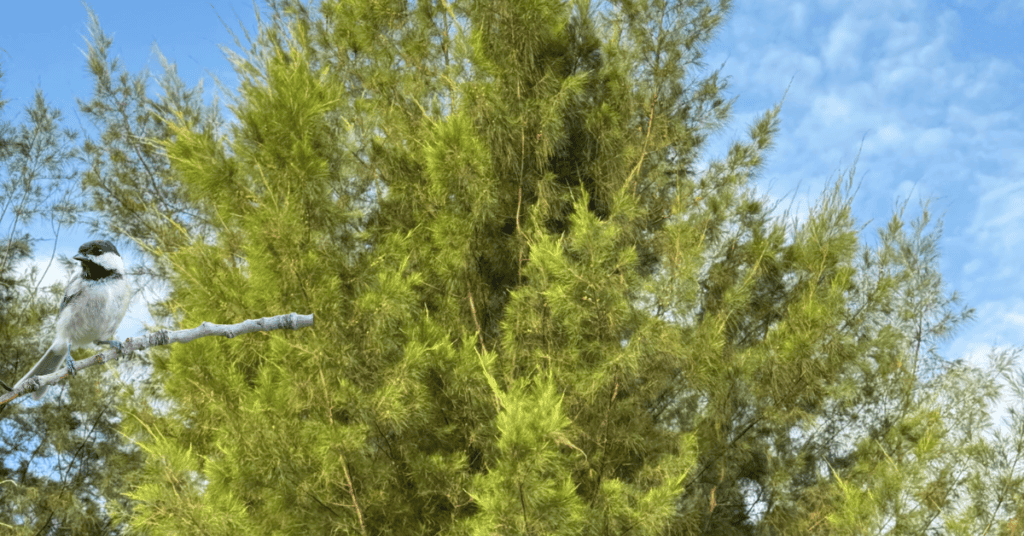
This tree is a chickadee favorite for two reasons: food and cover. Its blue, waxy berries feed them in winter when insects are scarce. And if you’ve ever watched one dive into dense branches after grabbing a seed from a feeder, you know they’re not just hiding—they’re caching.
I’ve released more than a few rehabbed chickadees near a stand of red cedars. Within minutes, they were back to business: pecking bark, hiding seeds, and calling out like they owned the place.
- Produces berries from late fall through winter
- Dense foliage will provide Chickadee shelter
- Insect-friendly bark invites foraging
2. Serviceberry (Amelanchier spp.)
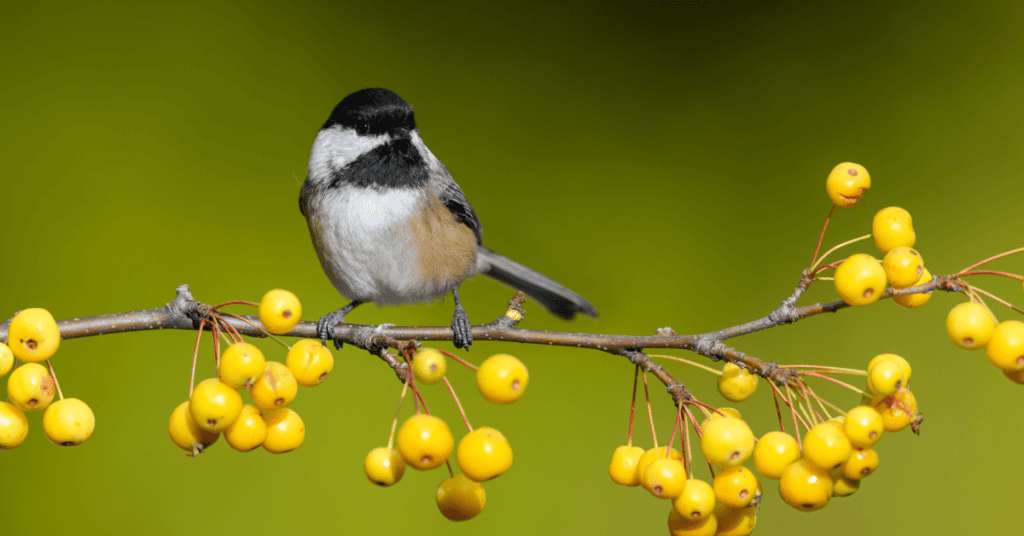
These early bloomers are a spring jackpot for so many types of birds. Chickadees will find their way to these trees for the insects that swarm the flowers. Plus they’ll stick around for the juicy berries that ripen in June.
In one of the gardens we maintain for released birds, I caught a chickadee balancing on a thin branch, ripping into a berry with a kind of joyful rage. It’s their version of summer fruit salad.
- Berries attract in early summer
- Flowers bring in insects during the breeding season
- Native shrub with manageable height for city backyards
3. Birch Trees (Betula spp.)
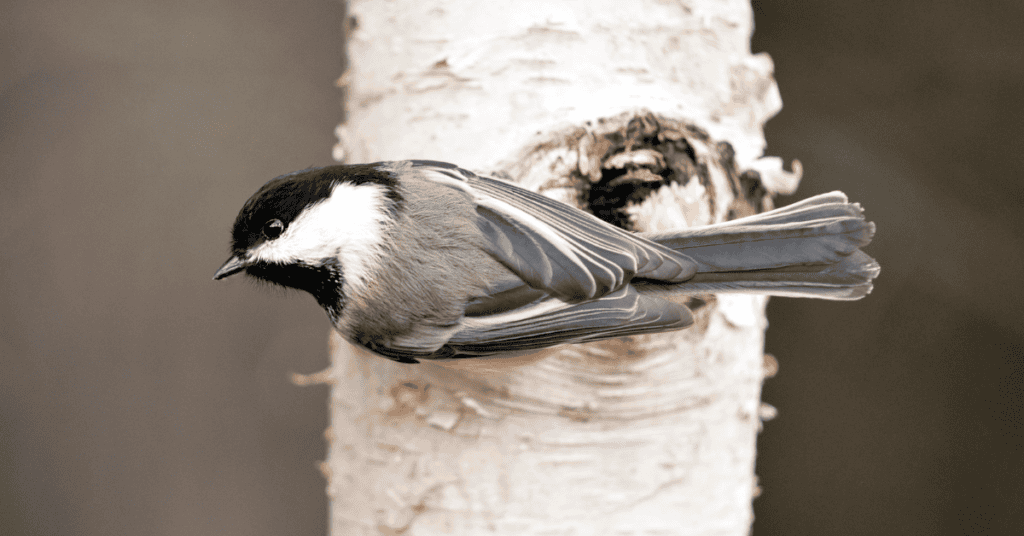
Chickadees don’t eat birch leaves or flowers, but they love the insects that do. These trees are like all-you-can-eat buffets for birds that glean bark for spiders and caterpillars.
I’ve watched fledgling chickadees learn how to pull inchworms off birch branches. It’s clumsy at first—wings flapping, awkward hops—but they figure it out fast.
- Attracts caterpillars and spiders
- Great for bark foraging behavior (a chickadee specialty)
- Often found near rivers or in parks along streams
4. Sunflowers (Helianthus spp.)
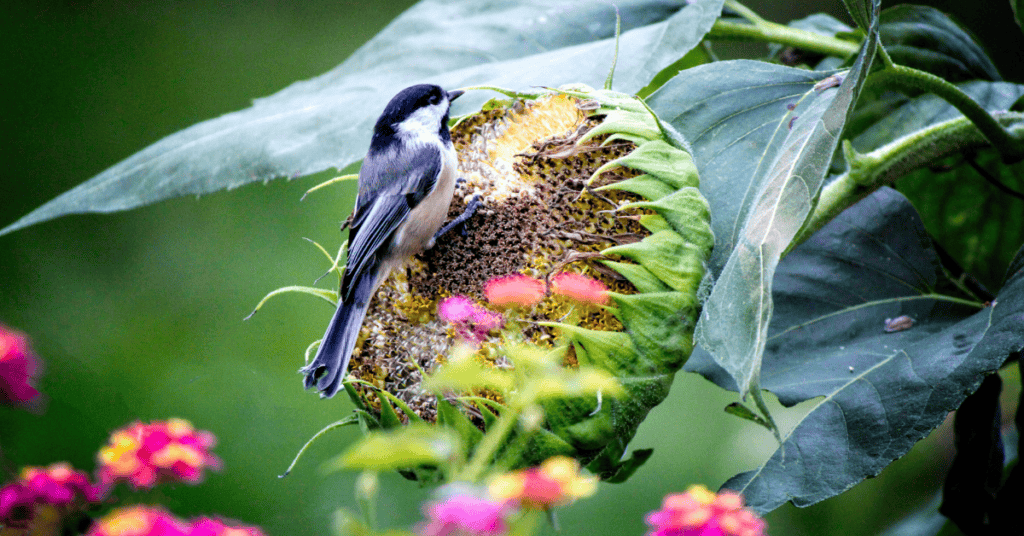
Sunflowers are magnets for chickadees once they go to seed. These tiny birds will hang upside-down on drooping seed heads. Its fun to watch them popping out seeds one by one with impressive dexterity.
After planting a patch of native sunflowers in a school rooftop garden, I came back in the fall to find chickadees methodically working their way down each flower, as if checking items off a grocery list.
- Seeds are high-fat and easy for chickadees to crack
- Flowers attract pollinators (and the bugs that follow)
- Annuals that do well even in NYC container gardens
5. Oak Trees (Quercus spp.)
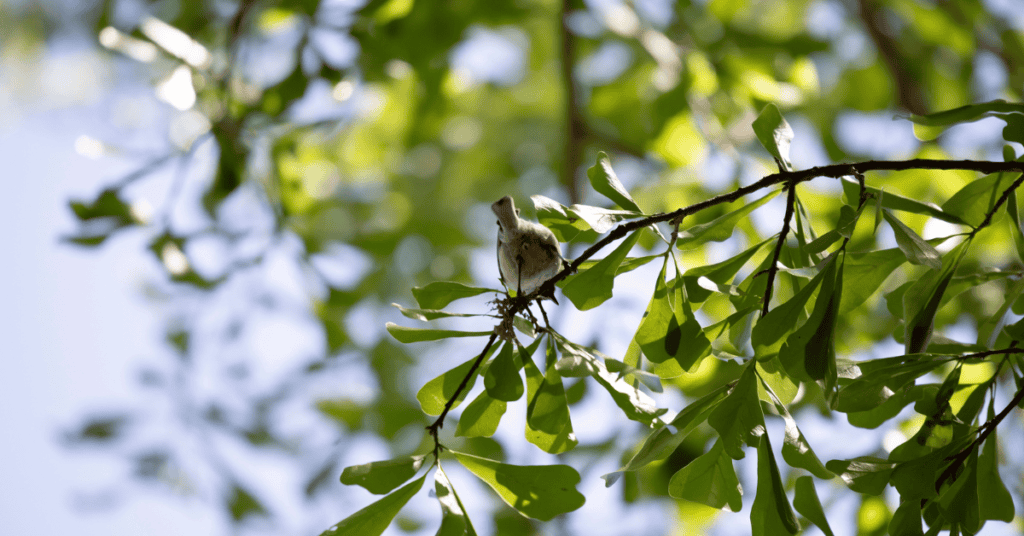
If you want insects, you want oaks. Oaks support more caterpillar species than any other North American tree—over 500 species, to be exact. That’s prime chickadee nesting-season fuel.
When I’m choosing release sites for young chickadees, I always check if there’s a mature oak nearby. No oak, no go.
- Hosts hundreds of caterpillar species
- Chickadees glean insects from leaves and branches
- Acorns also support other wildlife that create a healthy ecosystem
6. Pussy Willow (Salix discolor)
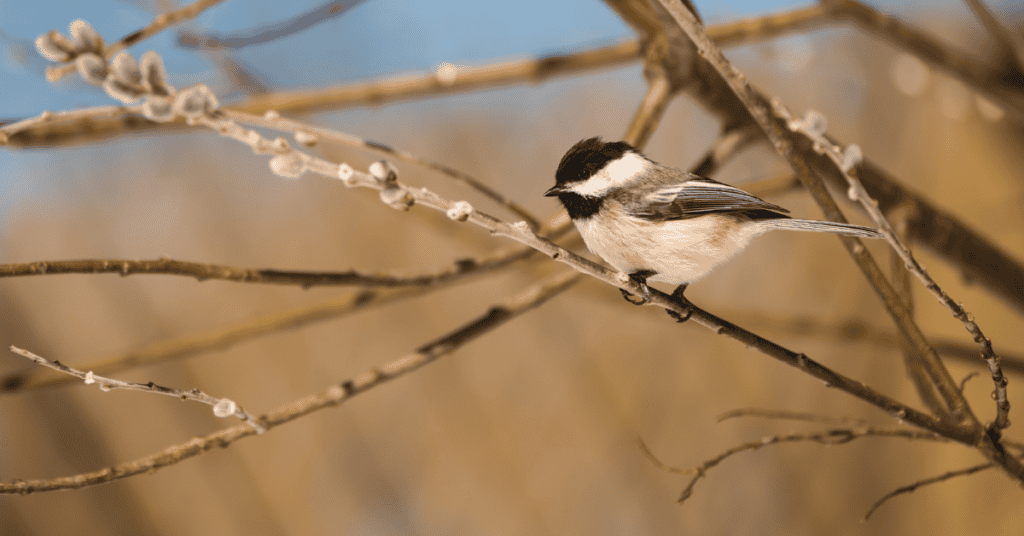
Early spring is a stressful time for small birds. Food is still scarce, but chickadees time their breeding season with the insect bloom on pussy willows. It’s nature’s well-timed snack bar.
- Flowers bloom before most plants leaf out
- Brings in pollinators, gnats, and aphids—ideal chickadee food
- Great for wetter spots in your yard or rain gardens
7. Elderberry (Sambucus canadensis)
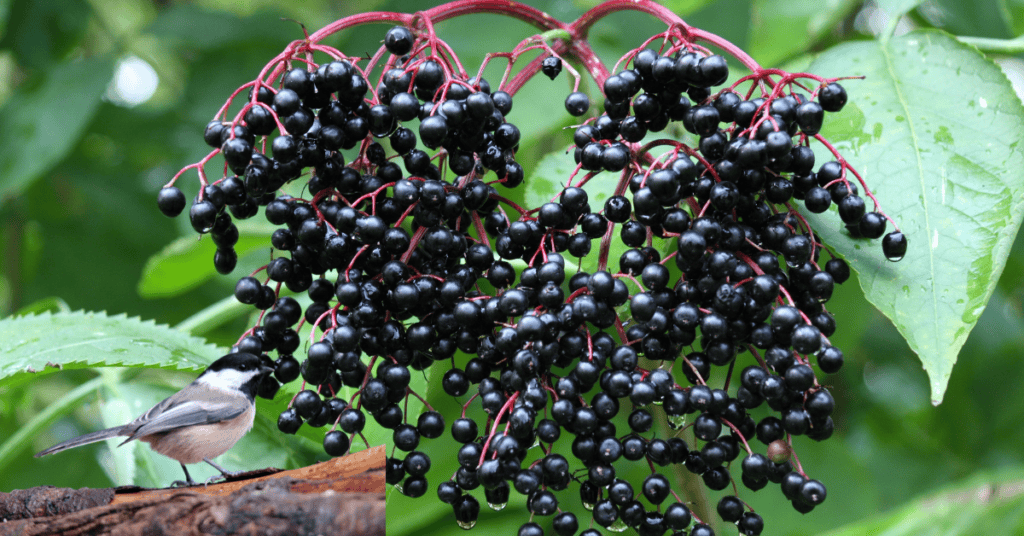
Chickadees don’t usually go for elderberries as much as the bugs crawling all over them. Aphids, beetles, and tiny spiders love elderberry shrubs—and where there are bugs, there are chickadees.
I once watched a chickadee ignore the elderberries entirely and go straight for the ants farming aphids under a leaf. Efficient, ruthless, tiny bird behavior.
- Attracts a so many soft-bodied insects
- Blooms in mid-summer with broad flower clusters
- Tolerant of partial shade, great for understory planting
8. Dogwood (Cornus florida & Cornus sericea)
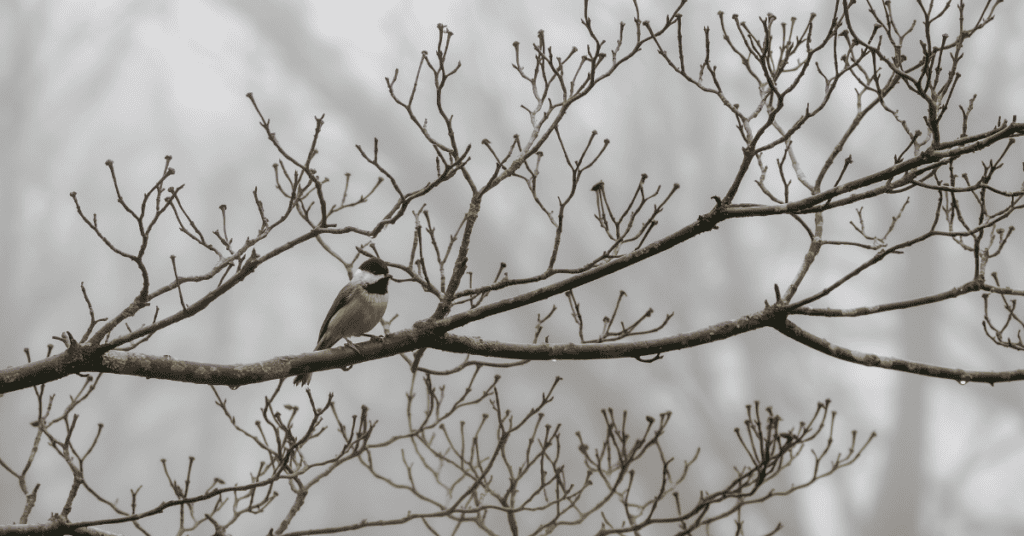
Dogwoods are great multi-taskers. In spring, their blossoms pull in pollinators, which means food. In the fall, they offer red berries for energy boosts when nights start to chill.
- Dual purpose: insect buffet in spring, berries in fall
- Dense branching structure for cover
- Native species adapt well to urban planting
9. Maple Trees (Acer spp.)
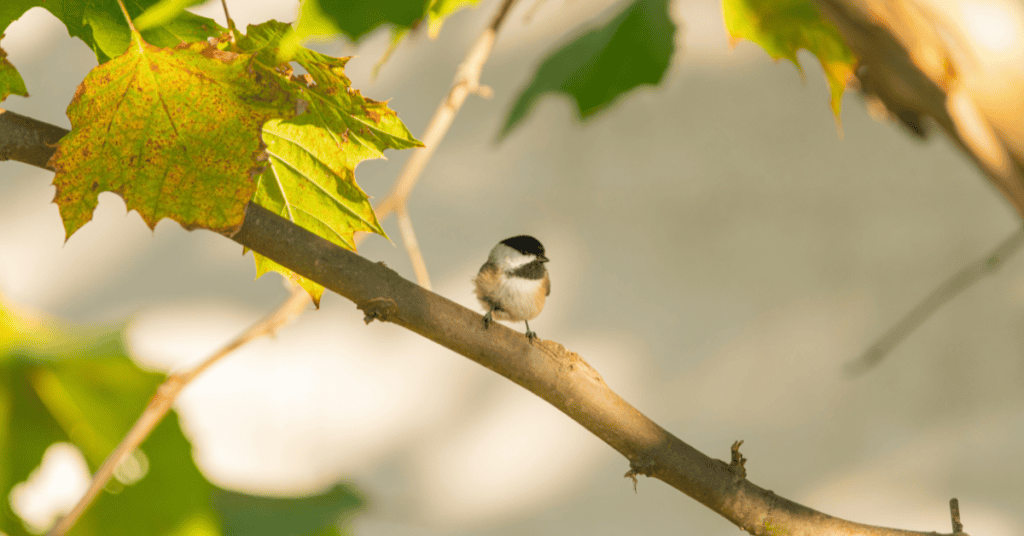
Especially Sugar Maples and Red Maples. These are hotspots for caterpillars and ants, which chickadees love during nesting season. The loose bark can also hide spiders and other invertebrates.
I’ve seen chickadees peel at flaky bark like they’re opening a snack bag. You can almost hear the crunch.
- Hosts numerous insect species
- Offers good foraging opportunities year-round
- Bright foliage can also create dappled shade cover
10. Black Cherry (Prunus serotina) or Chokecherry (Prunus virginiana)
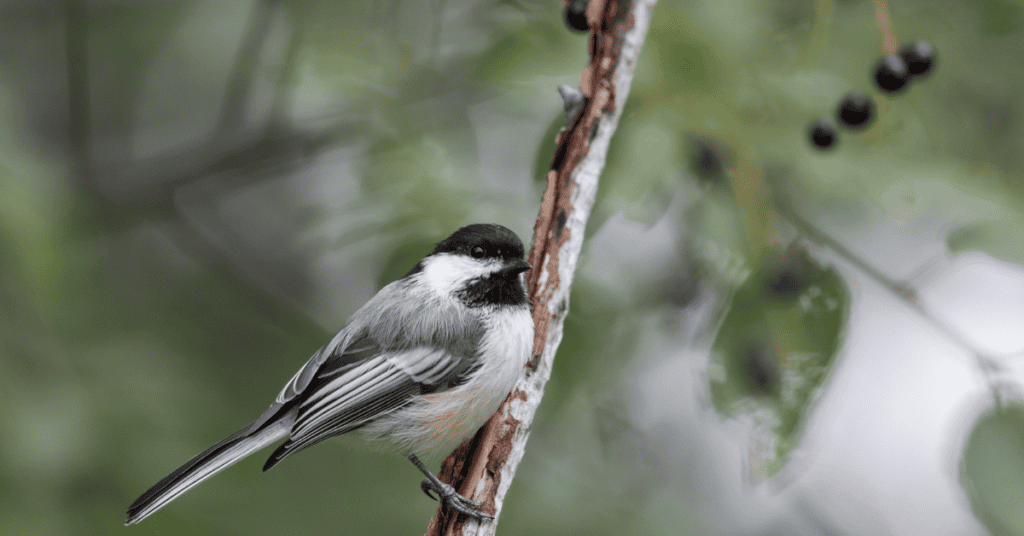
Chickadees hunt insects in the blossoms, especially in May and June when they’re raising young. The rough bark also hosts moth larvae, which are gold during the chickadee nesting season.
When we had a rehabbed chickadee pair successfully nest in a black cherry tree at the edge of a city park, I took that as a sign we’d done something right. The fledglings were healthy, vocal, and very into caterpillars.
- Early-season blooms attract insects
- Bark hosts moth and butterfly larvae
- Tall canopy trees—best for larger yards or urban woodlots