
With spring and fall migration, many areas will see or hear a Nightjar. If you hear that typical call in the late evening or night, then you may have stumbled across one like a Whipporwill or Chuck-will’s-widow. In NYC, the birding community is on top of any new sightings. Recently, there was a Chuck-will’s-widow in Central Park, and the birding community was all over it!
1. There Are More Nightjars Than Most People Realize
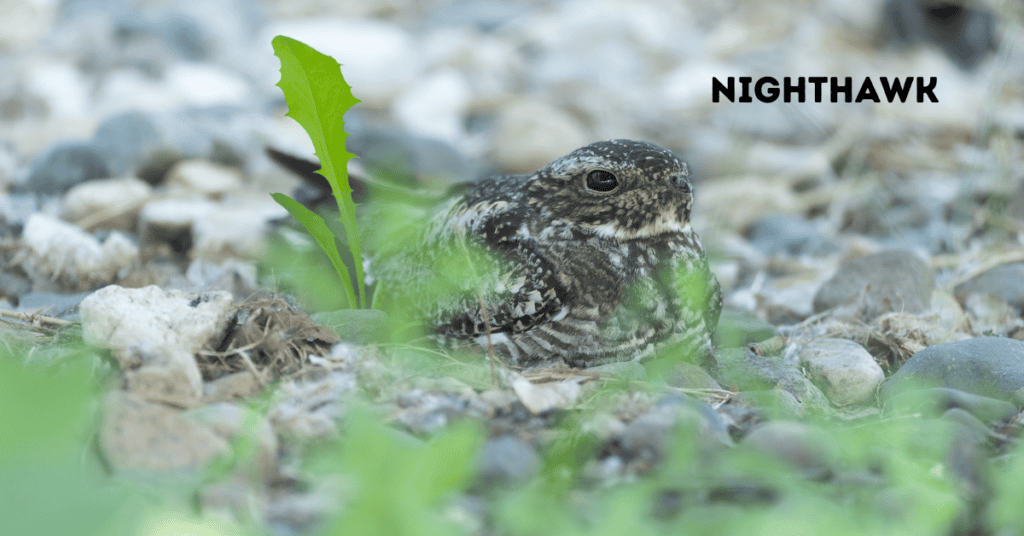
Nightjars belong to the family Caprimulgidae, and there are over 98 species worldwide (most estimates range from 98–110, depending on taxonomic updates). Some of these include birds like the Common Nighthawk, Eastern Whip-poor-will, and Chuck-will’s-widow. Did you know that they’re found on every continent except Antarctica, with the highest diversity in tropical regions?
What’s interesting is how often new splits or reclassifications happen. In recent years, advances in bioacoustics (analyzing bird calls) and genetics have led researchers to separate species that were once lumped together. Birders have followed this closely, especially in Central and South America where subtle call differences can mean entirely different species.
A major update in 2021 reshaped the Savanna Nightjar group, formerly known as Caprimulgus affinis. Researchers split it into three distinct species after identifying consistent differences in their calls, something birders had long suspected.
2. The Chuck-will’s-widow isn’t Strictly an Insect Eater
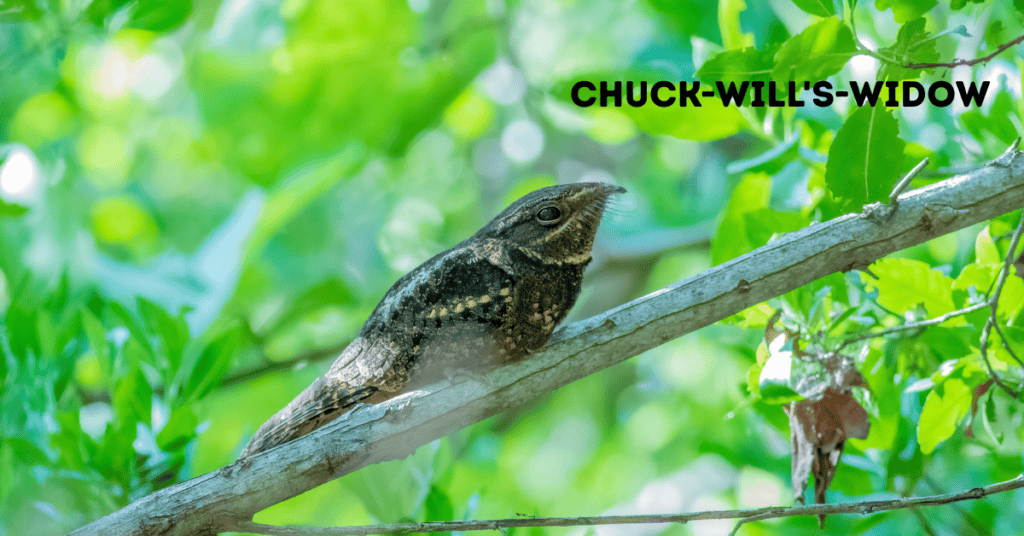
The Chuck-will’s-widow is one of the few nightjars known to occasionally (but VERY rarely) eat small birds and bats, not just insects. Studies and stomach-content analyses have confirmed the presence of warbler remains and even those of small sparrows. This makes it an outlier in a group otherwise built for catching moths and beetles mid-air.
There have been multiple verbal observations in the birding community, but no known videos documenting this behavior. These predation events tend to happen at dusk when migrating songbirds are active. It creates a rare overlap between typical insect hunters and vertebrate prey.
3. Nightjars Range From Tiny to Large
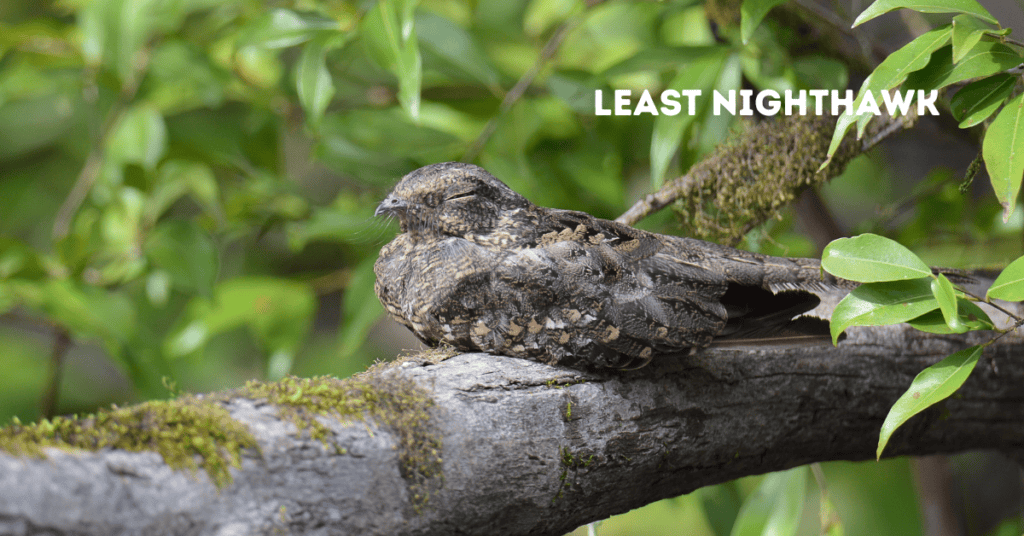
The species as a whole definitely has a variety of sizes. The Least Nighthawk is one of the smallest, around 6–7 inches long. Meanwhile, species like the Great Eared Nightjar can reach 16 inches with an impressive wingspan and ear-like feather tufts (hence the name). And then there’s the Chuck-will’s-widow which is the largest nightjar in North America (around 12 inches long).
This size difference isn’t just visual; it affects behavior. Larger species often rely more on perch-hunting and ambush tactics, while smaller nighthawks spend more time on the wing. Field researchers in Southeast Asia have noted that larger nightjars are easier to detect by eye but harder to study because of dense forest habitats.
4. Migration Can Span Entire Continents
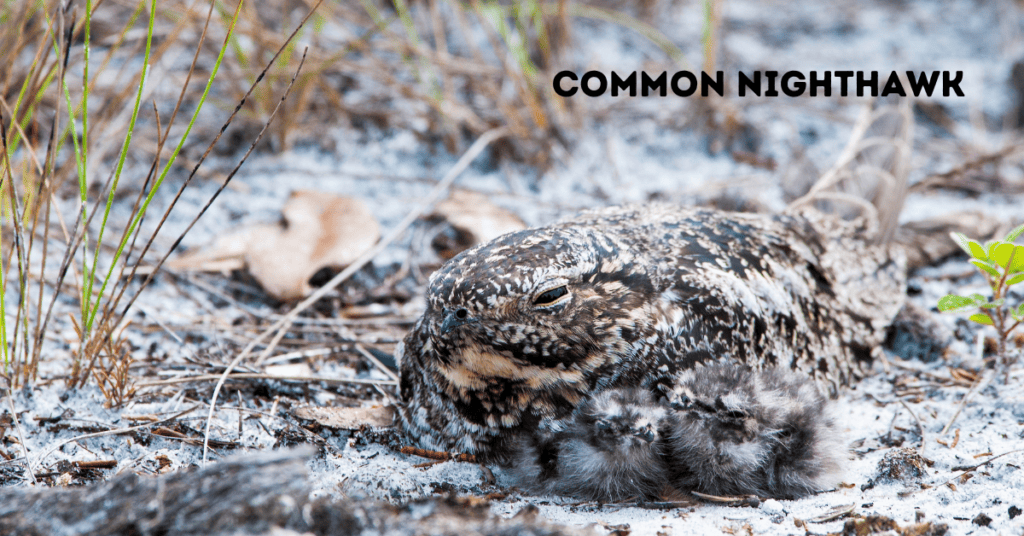
Not all nightjars migrate; it all depends on local food availability and climate. Species like the Common Nighthawk migrate from North America all the way to South America. They are known to travel thousands of miles each year. That’s a huge journey for a bird that spends most of its time flying at dusk and night. Nightjars are one of those birds that fly at night.
Recent tracking studies use lightweight geolocators. These can show migration routes that include long nonstop flights over the Gulf of Mexico and the Amazon Basin. Keep in mind that conservation groups have raised concerns because populations have declined significantly. It’s suspected to be likely due to insect loss and habitat changes along these routes.
5. Their Camouflage Is So Good They “Disappear”
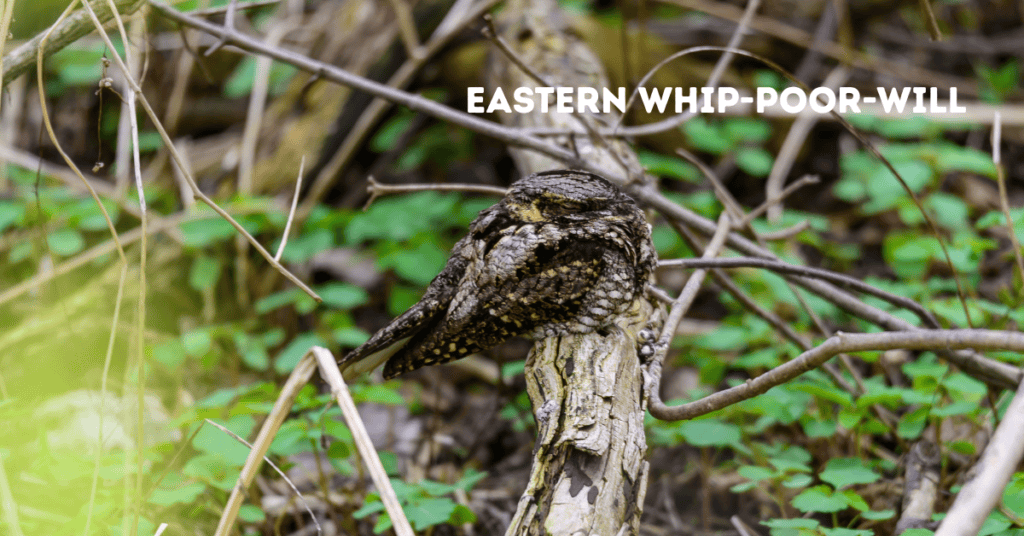
Nightjars like the Eastern Whip-poor-will and Chuck-will’s-widow rely on cryptic plumage that blends perfectly with leaf litter and bark. During the day, they sit motionless, often going completely unnoticed, even when people walk right past them.
There are well-known birding stories, including sightings in places like Central Park, where birders gathered to see a Whip-poor-will tucked into the forest floor. Even with dozens of people looking, the bird can be nearly invisible until it moves. This has made them a favorite “challenge bird” among experienced birders.
6. They Don’t Build Nests at All
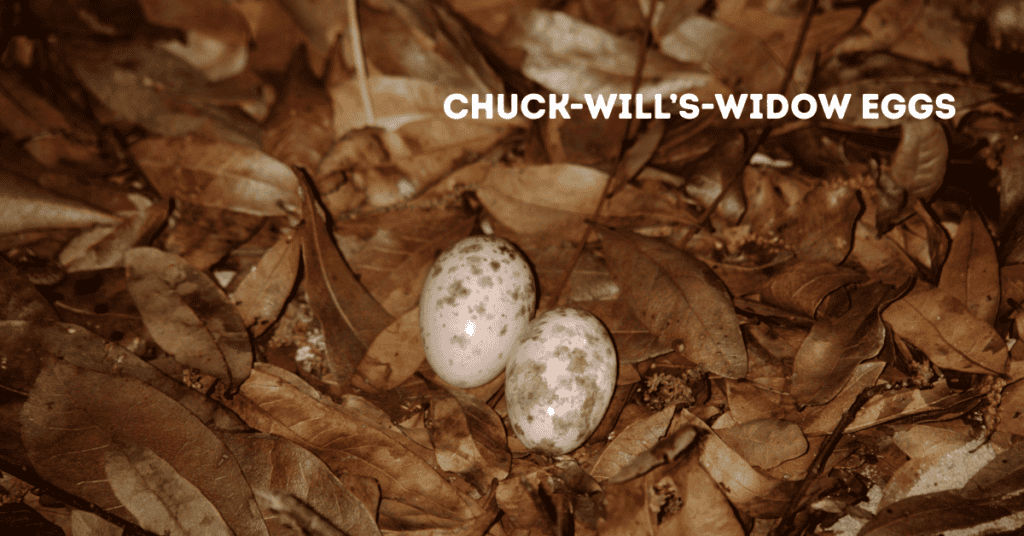
Most nightjars, including the Common Poorwill, lay their eggs directly on the ground without building a nest. The eggs are camouflaged to match the surrounding soil, leaves, or gravel.
This strategy works surprisingly well, but it also makes them vulnerable. Studies have shown higher predation rates in areas with increased human disturbance. Wildlife biologists use motion cameras to document how still the adults are on the ground. This shows how they often rely entirely on camouflage instead of fleeing.
7. Some Nightjars Can Enter a Torpor State
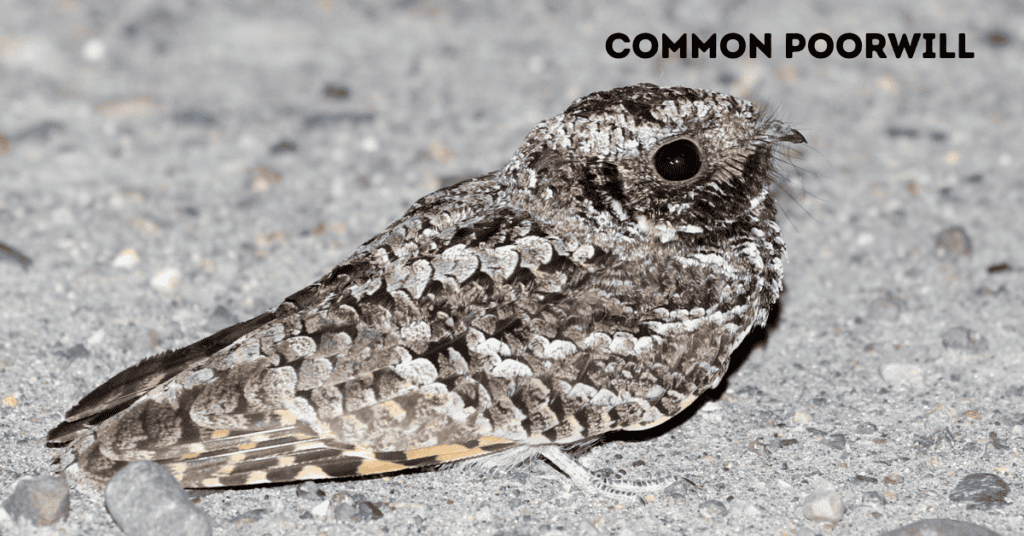
The Common Poorwill is the only bird known to enter true hibernation-like torpor for extended periods, sometimes lasting weeks. Its body temperature and metabolism drop dramatically to conserve energy. But most other nightjars, and even some hummingbirds like the Bee Hummingbird and Anna’s, use torpor for brief periods.
This behavior has been studied extensively in desert regions of the western U.S. Researchers have documented poorwills using rock crevices for shelt er during cold periods. It’s one of the few examples in birds where energy conservation goes beyond overnight torpor into something closer to mammalian hibernation.
8. Their Calls Are Often the Only Way to Find Them
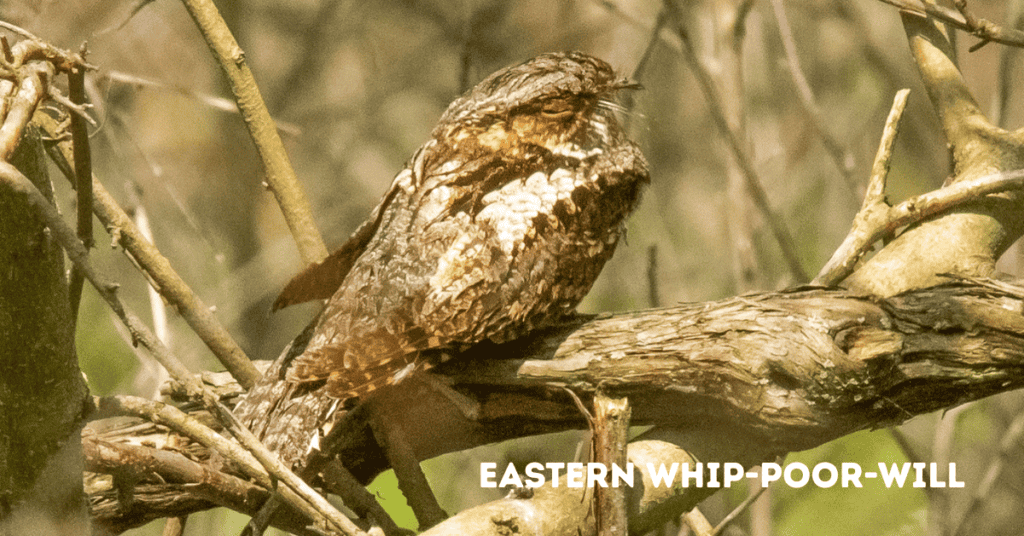
Nightjars are more often heard than seen. Species like the Whip-poor-will and Chuck-will’s-widow are named after their repetitive, onomatopoeic calls.
Birding surveys rely heavily on these vocalizations. In fact, long-term population studies (such as those coordinated by the North American Breeding Bird Survey) often track nightjar trends using nighttime listening routes. There’s been growing concern in recent years because fewer calls are being recorded, pointing to population declines tied to insect loss and habitat fragmentation.
9. Nightjars Have Exceptional Night Vision Compared to Most Birds
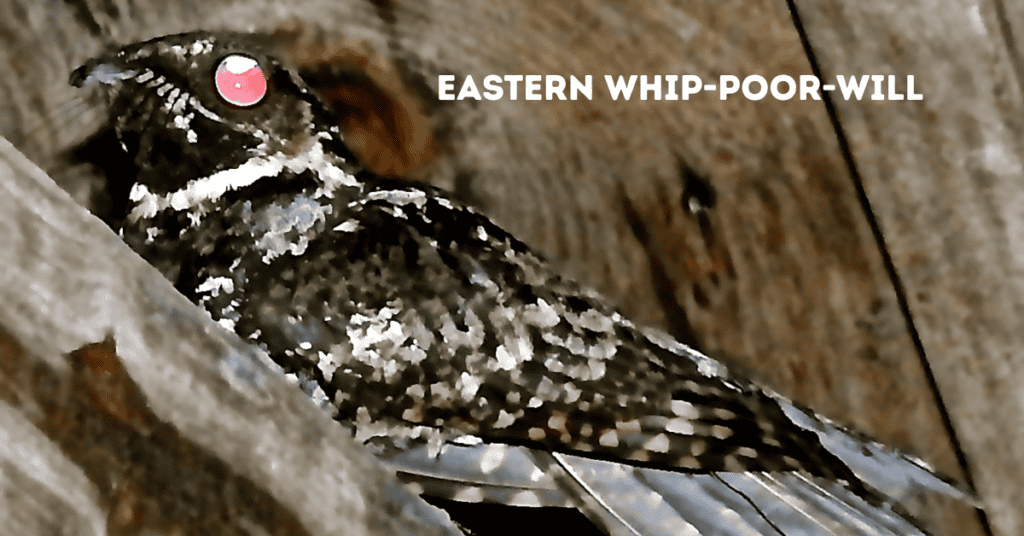
Nightjars, including species like the Eastern Whip-poor-will and Common Nighthawk, are built for low-light hunting. Their eyes contain a high density of rod cells, which are specialized for detecting light and movement in dim conditions. Compared to many daytime birds that rely more on color vision (cones), nightjars sacrifice color detail for the ability to see clearly at dusk and in near darkness.
Learn more about other birds that can see at night here.
They also have large eyes relative to their head size, wide pupils, and a reflective layer behind the retina (similar to a tapetum-like effect seen in some nocturnal animals), which helps maximize the light they can use. Field studies have shown they can track fast-moving insects in light levels where most birds would struggle to even orient themselves. Birders often notice this firsthand, nightjars will continue actively feeding well after sunset, long after swallows and other aerial insectivores have stopped.
10. Nightjars Time Their Lives Around the Moon
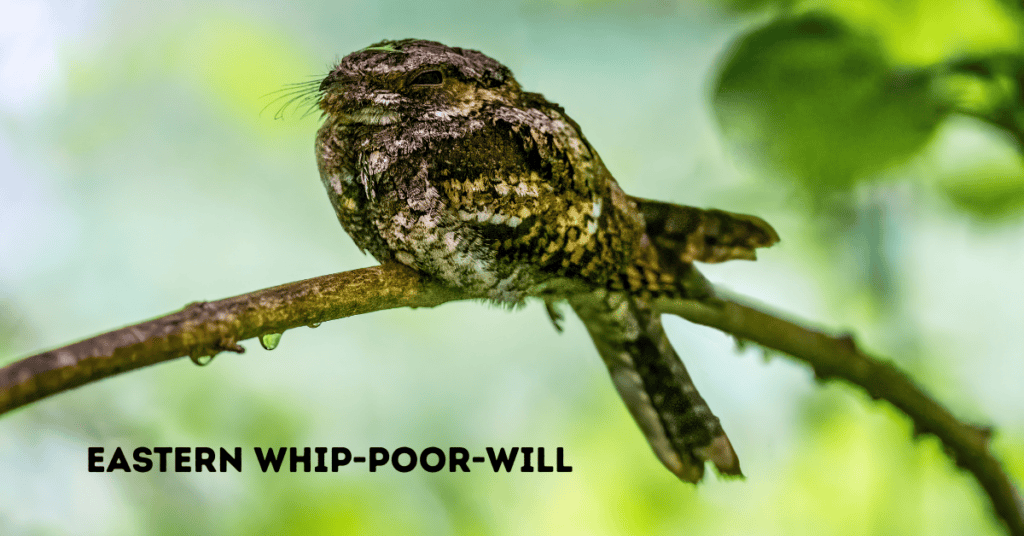
Nightjars like the European Nightjar don’t just tolerate moonlight, they actively depend on it. Research using GPS trackers has shown their foraging activity more than doubles on moonlit nights. Moonlight helps since they rely on vision to spot insects silhouetted against the sky. This increase in feeding allows them to quickly build energy reserves. In turn, it directly ties into when they move and migrate.
What’s wild is how synchronized this becomes. The same study found that large groups of nightjars often begin migration in pulses shortly after a full moon. Some populations are showing departures in sync with the full moon cycle. Birding circles picked up on this after the Lund University study came out. Folks started noticing more consistent nightjar movements tied to lunar cycles.
The connection doesn’t stop at migration. Breeding behavior also appears linked to moon phases. Field studies have shown that some nightjars are more likely to time egg-laying around waxing moon periods. It’s very likely because brighter nights improve hunting success. So it’s helpful when chicks hatch and food demand spikes. It’s not perfectly aligned, but the pattern shows up enough that researchers consider moonlight a real ecological driver.
Put it all together, and you get a bird that’s basically running on a lunar schedule. Feeding more when the moon is bright, moving when energy peaks, and even timing reproduction to match better hunting conditions. It’s one of the cleaner examples in birds of how something as simple as moonlight can shape behavior across an entire life cycle.