
Eagles are powerful hunters that eat a wide variety of animals to survive in different habitats around the world. Most eagles primarily hunt fish, birds, and small mammals, though they also eat reptiles, insects, and dead animals they find.
When you watch an eagle soar overhead, you might wonder what drives these magnificent birds to hunt. Different eagle species have adapted to eat specific types of prey based on where they live and what food sources are available to them.
From the fish-loving bald eagle to the meat-eating Golden Eagle, each species has developed unique hunting skills and feeding habits. You’ll discover how baby eagles learn to hunt, why some eagles prefer fresh kills while others scavenge dead animals, and what special adaptations help these birds catch their prey so successfully.
Overview of What Eagles Eat
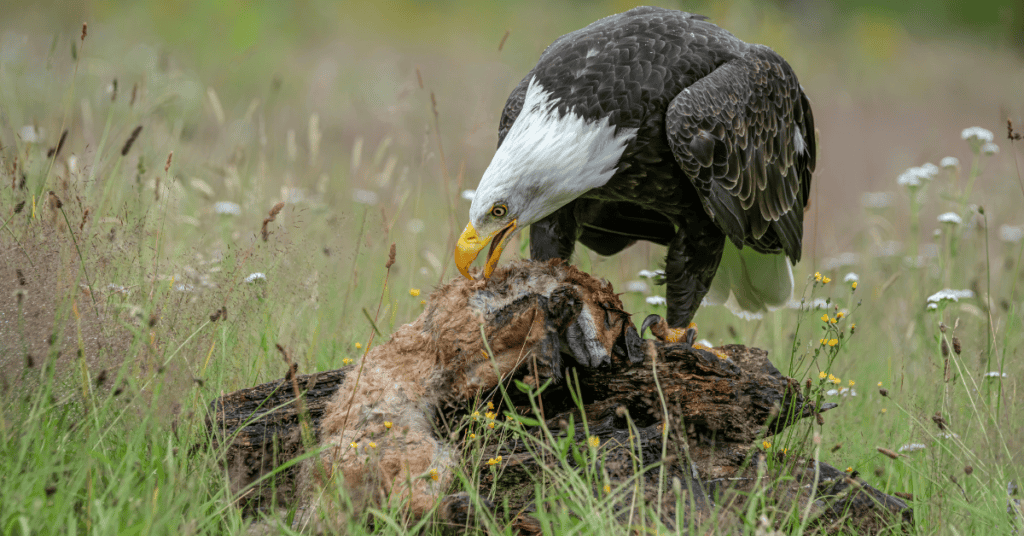
Eagles are strict carnivores that hunt live prey and scavenge dead animals. Their diet changes depending on where they live and the season.
Carnivorous Nature of Eagles
You’ll find that all eagle species are 100% carnivorous. They never eat plants, fruits, or seeds like some other birds do.
Eagles belong to the group called raptors or birds of prey. Their bodies are built for hunting meat. They have sharp, curved beaks for tearing flesh and powerful talons for grabbing prey.
Common prey animals include:
- Small mammals (rabbits, squirrels, rodents)
- Fish (salmon, trout, catfish)
- Birds (ducks, geese, smaller songbirds)
- Reptiles (snakes, lizards)
- Amphibians (frogs, salamanders)
Your typical eagle can carry prey weighing up to about 4 pounds. Larger animals are usually eaten where they’re found rather than carried away.
Opportunistic Feeding Behaviors
Eagles are opportunistic feeders. This means you’ll see them take whatever food is easiest to get at any given time.
They will steal food from other birds when they can. Bald eagles often rob fish from other birds instead of catching their own. Learn more Bald Eagle facts here!
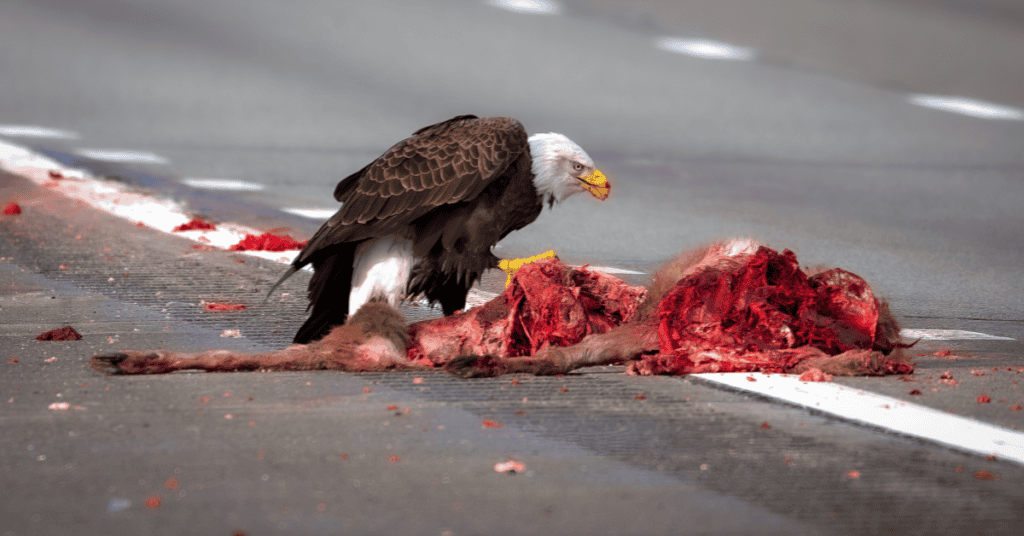
Eagles also eat carrion, which is the dead bodies of animals they didn’t kill. This behavior helps them survive when live prey is hard to find.
During winter, many eagles gather near water sources that don’t freeze. Overwintering bald eagles often feed together in large groups at these spots.
You might see eagles eating roadkill or animals that died from disease. This scavenging behavior is completely normal and healthy for eagle populations.
Seasonal and Geographic Diet Variations
Your local eagle’s diet depends heavily on where it lives and what time of year it is. Different eagle species in different places eat very different foods.
In northern Sweden, Golden Eagles eat more birds than mammals during the breeding season. But in other areas, they prefer ground mammals like rabbits.
Seasonal changes affect diet:
- Spring/Summer: More fish and young animals
- Fall/Winter: More carrion and waterfowl
Bonelli’s Eagles focus heavily on rabbits in areas with high rabbit populations. When rabbits are scarce, they switch to birds and other small mammals.
Coastal eagles eat more fish and seabirds. Mountain eagles hunt more ground mammals and birds. Desert eagles often eat reptiles and small desert animals.
Key Prey: Fish, Birds, and Small Mammals
Eagles focus their hunting efforts on three main food groups that provide the best energy return for their efforts. Fish make up the largest portion of many eagle diets, while waterfowl and small mammals round out their preferred menu.
Fish as Staple Food for Many Eagles
Fish represent the most important food source for many eagle species around the world. You’ll find that White-tailed Eagles make strategic choices within their primary prey fish based on availability and size.
Bald eagles living near water depend heavily on fish for survival. Eagles near coastal estuaries relied more on fish compared to those in inland areas.
The fishing technique varies by species. Some eagles like the Bald Eagle, Grey Headed Fish Eagle, and African Fish Eagle will dive directly into water to catch fish (kind of like Ospreys). Others prefer to snatch fish swimming near the surface. Bald Eagle are known to steal fish right from other birds.
Fish size matters when eagles hunt. Larger fish provide more calories but require more energy to catch and carry. Smaller fish are easier targets but offer less nutritional value.
You’ll notice eagles often choose fishing spots with shallow water or areas where fish gather naturally. This strategy helps them save energy while hunting.
Waterfowl, Ducks, and Geese
Ducks and geese make excellent prey for eagles because of their size and nutritional value. Key prey species included black ducks and common goldeneyes in studies of eagle feeding habits.
Waterfowl hunting requires different skills than fish catching. Eagles must time their attacks when ducks or geese are vulnerable on the water’s surface.
During migration seasons, you’ll see eagles taking advantage of large flocks of waterfowl. These birds provide high-energy meals that help eagles through difficult winter months.
Geese present challenges due to their larger size and aggressive nature. Eagles typically target younger or weaker geese rather than healthy adults.
The hunting success rate for waterfowl varies by location. Eagles in coastal Maine ate more avian prey than those in other regions.
Small Mammals: Rabbits, Squirrels, and Rodents
Small mammals like rabbits, squirrels, and rodents provide consistent protein sources for eagles year-round. Small mammals are eaten along with other prey items as part of the varied diets of eagles.
Rabbits rank among the most valuable mammal prey. Their size provides substantial nutrition while remaining manageable for eagles to carry.
Squirrels offer seasonal opportunities, especially when they’re active during daylight hours. You’ll find eagles hunting squirrels in wooded areas near their nesting sites.
Rodents like mice serve as supplemental food sources. All small animals weighing under 50 grams fall into this category for African fish eagles.
Ground-dwelling mammals become easier targets in open fields. Eagles use their excellent eyesight to spot movement from high perches before diving to catch prey.
Other Animal Prey: Reptiles, Amphibians, Insects, and More
Eagles hunt many different types of animals beyond fish and mammals. They catch snakes, lizards, frogs, crabs, and even insects when the chance comes up.
Reptiles: Snakes, Lizards, and Turtles
You’ll find that many eagles are skilled reptile hunters. The short-toed eagle specializes in eating reptiles and is known as one of the main reptile-eating eagles in Europe and Asia.
Snakes make up a big part of some eagles’ diets. Serpent eagles got their name because they eat so many snakes. These birds can handle venomous snakes, too.
Lizards are easier targets for eagles than snakes. Any bird that eats lizards will also eat snakes of the right size. Bald eagles and golden eagles both catch lizards regularly.
Turtles pose more of a challenge because of their shells. Eagles usually target smaller turtles or young ones with softer shells. They may drop turtles from high up to crack their shells.
Eagles have great eyesight that helps them spot reptiles moving on rocks or in grass. They swoop down quickly to grab these cold-blooded animals before they can hide.
Amphibians and Crabs
Amphibians like frogs and salamanders give eagles easy meals near water. These animals move more slowly than birds or mammals. Eagles can spot them hopping or swimming from far away.
Frogs are common eagle prey, especially during spring when they gather to mate. Eagles wade into shallow water or perch nearby to catch them. Young eagles often start by hunting frogs before moving to bigger prey.
Salamanders and other amphibians hide under rocks and logs. Eagles flip over these hiding spots with their talons to find food underneath.
Crabs provide good meals for coastal eagles. Bald eagles walk along beaches and mudflats to catch crabs. The eagles use their strong beaks to crack open the crab shells and eat the meat inside.
Insects and Unusual Prey
You might be surprised that large eagles sometimes eat tiny insects. Young eagles often start by eating insects and small lizards before they learn to catch bigger animals.
Grasshoppers and beetles are easy targets when they’re flying or sitting on plants. Eagles may eat these insects when other food is hard to find.
Dragonflies attract some eagles because they’re bigger than most insects. Eagles are among the birds that eat dragonflies when they fly near water.
Adult eagles don’t rely on insects as their main food. But they’ll grab them as quick snacks between hunting larger prey. This shows how adaptable eagles are when it comes to finding food.
Carrion and Scavenging in Eagle Diets
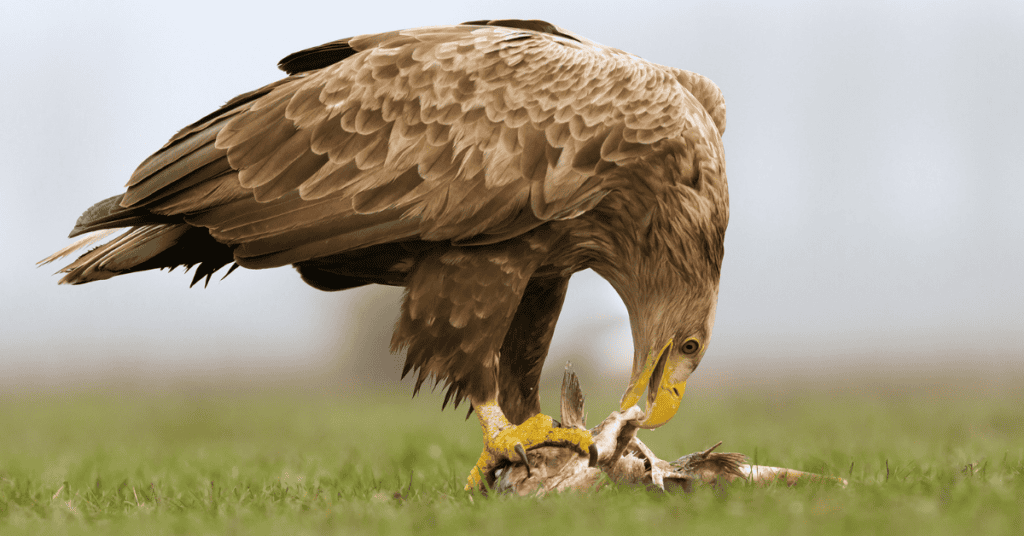
Many eagle species regularly eat dead animals they find, rather than only hunting live prey. Eagles take advantage of carrion when it’s available, especially during the winter months when hunting becomes more difficult.
Role of Carrion in the Wild
Carrion plays a major part in eagle diets across different habitats. Research shows that ungulate carcasses make up a significant portion of Golden Eagle diets in Mediterranean mountain regions.
Winter feeding patterns change dramatically for many eagles. During cold months, you’ll find that eagles visit carrion sites more frequently when other food becomes scarce.
White-tailed eagles depend heavily on dead animals. Studies reveal that mammals and carrion make up a large percentage of white-tailed eagles’ diets, making them important scavengers in their ecosystems.
Common carrion sources include:
- Dead deer and elk
- Fish washed up on the shores.
- Roadkill animals
- Livestock carcasses
Eagles compete with other scavengers, such as ravens, crows, and coyotes, for these food sources. Winter scavenging creates complex relationships between different animal species.
Opportunistic Scavenging Habits
Eagles adapt their feeding behavior based on what’s available in their environment. You’ll notice that eagles don’t just rely on hunting – they actively search for dead animals.
Age affects scavenging behavior significantly. Young eagles depend more on scavenging than adults because they haven’t developed strong hunting skills yet. Adult eagles hunt more successfully but still take carrion when they find it.
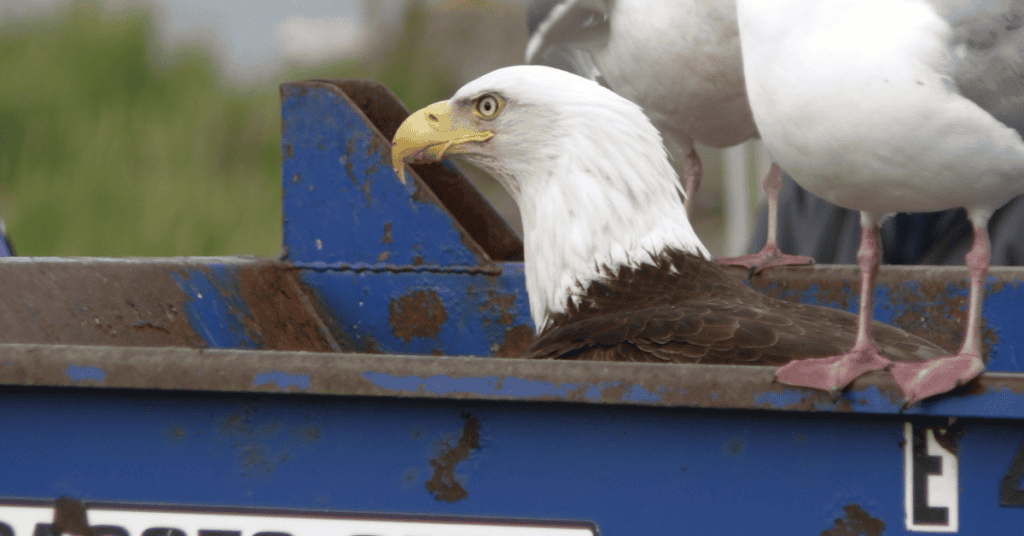
Seasonal changes drive scavenging patterns. During harsh weather, eagles spend more time looking for carrion or dumpster diving instead of hunting live prey. This helps them save energy when food is hard to find.
Eagles show smart feeding strategies:
- They remember productive scavenging sites
- They follow other scavengers to find food
- Often they’ll follow fishing boats
- They can detect carrion from long distances
Wedge-tailed eagles in Australia change their scavenging habits based on regional food availability and seasons. This flexibility helps these Aussie eagles survive in different environments throughout the year.
What Eagles Eat By Species
Different eagle species have developed unique hunting styles and food preferences based on their habitats, what their parents eat, and their physical abilities. Bald eagles prefer fish and water birds, while golden eagles hunt mammals and ground birds across diverse terrains.
Bald Eagle Diet Specifics
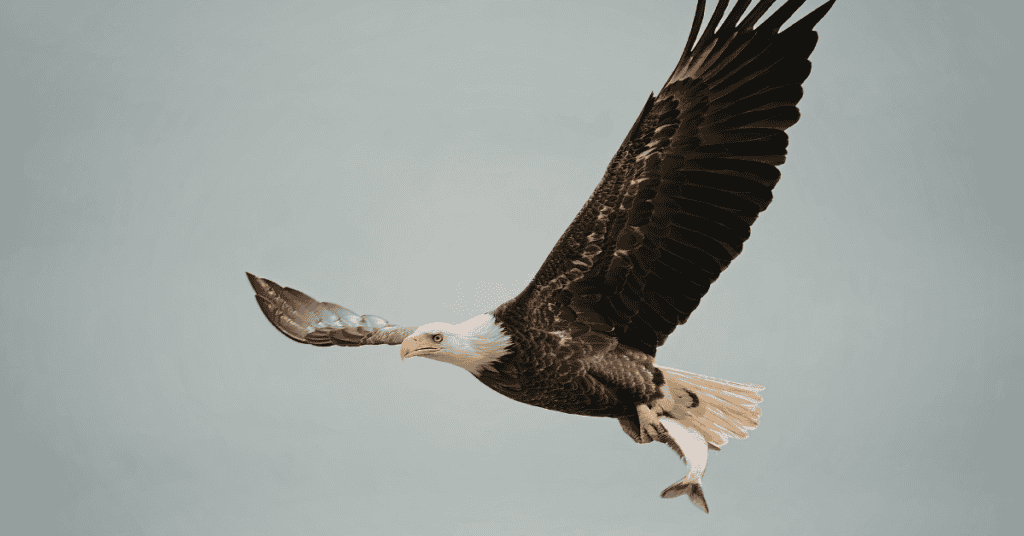
Bald eagles are fish specialists, with salmon, trout, and other fish making up about 60-70% of their diet. You’ll find these powerful birds near lakes, rivers, fishing boats, and coastlines where fish are plentiful. There are groups of them in Alaska that hang out near the fishing boats, trying to get a quick meal.
When fish aren’t available, bald eagles hunt waterfowl like ducks and geese. Research shows that bald eagles seldom attack ducks unless they are sick or disabled.
Primary Bald Eagle Foods:
- Fish: Salmon, trout, bass, pike
- Water birds: Ducks, geese, coots
- Carrion: Dead fish and mammals
- Small mammals: Rabbits, muskrats
Bald eagles also steal food from other birds. Studies of bald eagle food habits found that researchers observed 253 instances of eagles eating fish during 952 hours of observation.
These eagles need lots of energy. Scientists predict that overwintering bald eagles consume significant energy to maintain their body weight during cold months.
Golden Eagle Dietary Habits
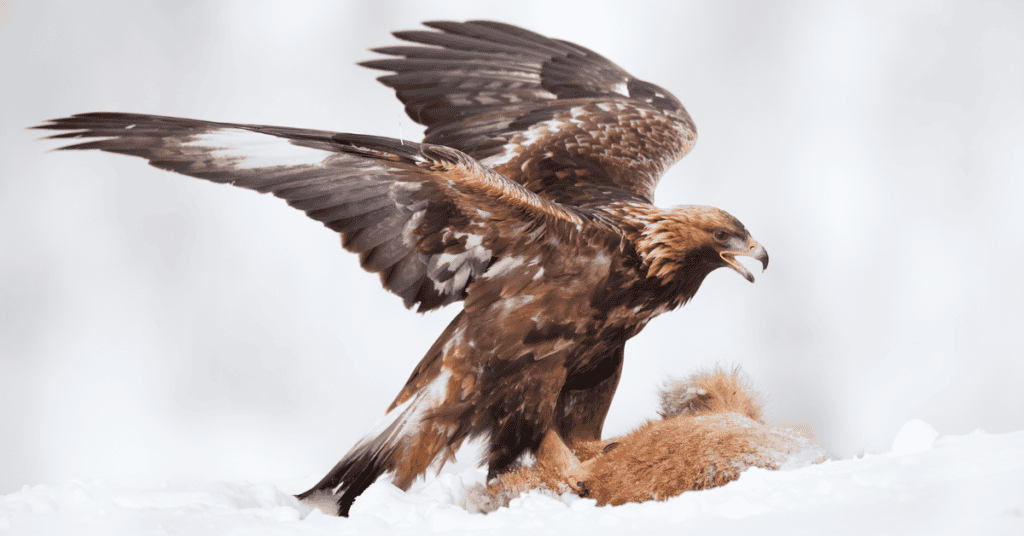
Golden eagles are versatile hunters that prefer mammals, like ground squirrels and marmots, over fish. You’ll see them soaring over mountains, deserts, and grasslands, hunting for ground-dwelling prey.
Rabbits rank as their favorite food across most regions. Studies show that golden eagles’ diet includes three species of rabbits as primary prey, with various water birds ranking third.
Golden Eagle Menu:
- Mammals: Rabbits, ground squirrels, marmots
- Birds: Grouse, pheasants, crows
- Reptiles: Snakes, lizards
- Young ungulates: Deer fawns, lamb
Research on the golden eagle diet during breeding season found 65 different prey species at 162 nests in Sweden. In northern areas, birds make up a larger portion of their diet.
Golden eagles hunt in territories where eagle hunting grounds are well known. They patrol these areas regularly, looking for prey.
Long-Crested Eagle Food Preferences

Long-crested eagles specialize in hunting small mammals, particularly rodents. You’ll find these eagles in wooded areas across sub-Saharan Africa where they perch and watch for movement below.
Long-Crested Eagle Diet:
- Rodents: Rats, mice, shrews (80% of diet)
- Reptiles: Small snakes, lizards
- Amphibians: Frogs, toads
- Insects: Large beetles, grasshoppers
These eagles hunt from perches rather than soaring. They sit quietly on branches or poles, then drop down to catch prey on the ground.
Long-crested eagles rarely take birds. Their curved talons work perfectly for grasping small mammals in grass and leaf litter.
Harpy Eagle and Steppe Eagle Diets
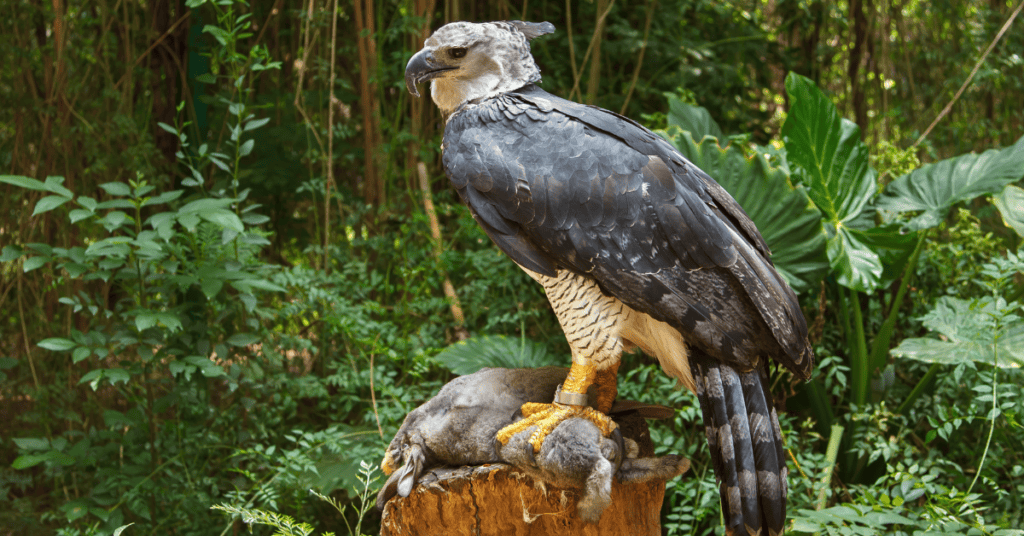
Harpy eagles are rainforest specialists that hunt arboreal mammals. You’ll find them in Central and South American jungles where they catch sloths, monkeys, and other tree-dwelling animals.
Harpy Eagle Favorites:
- Sloths: Two and three-toed species
- Monkeys: Howler monkeys, spider monkeys
- Other mammals: Opossums, anteaters
Steppe Eagles love the open grasslands of the Middle East and Egypt. Did you know that they specialize in hunting ground squirrels? Some people think this eagle looks more like a vulture! And some folks might confuse them with the Spotted Eagle. One thing is that these eagles migrate long distances and adapt their diet based on seasonal prey availability.
Steppe Eagle Foods:
- Small mammals: Ground squirrels, voles
- Birds: Larks, sandgrouse
- Reptiles: Lizards, small snakes
- Insects: Locusts during outbreaks
Both species show how eagle diets match their habitats perfectly. Harpy Eagles need strong legs for catching heavy mammals in trees. On the other hand, Steppe Eagles hunt lighter prey on open ground.
Diet of Baby Eagles and Eaglets
Baby eagles depend completely on their parents for food during their first months of life. Adult eagles carefully prepare and deliver meals directly to their young in the nest.
What Eaglets Are Fed
Your eaglets receive the same types of prey that adult eagles hunt, but in a modified form. Parents break down larger animals into smaller, manageable pieces before feeding.
Common prey items include:
- Fish (salmon, trout, bass)
- Small mammals (rabbits, squirrels, rodents)
- Birds (ducks, geese, other raptors)
- Reptiles and amphibians
Eagles are careful and attentive parents who separate out softer bits of food for the eaglets at their smallest stage. The adults remove bones, scales, and tough parts before offering food.
Food consumption of eaglets increased as chick rearing progressed and peaked between the 7th and 9th week. Young eagles eat more as they grow larger and develop.
Feeding Behaviors in the Nest
Parent eagles use specific techniques to feed their babies. Adults tear prey into bite-sized pieces and offer them directly to the eaglets.
Young eagles learn to compete for food early. They would peck at a finger or another eaglet as soon as they approached, competing for the food.
The feeding process includes:
- Parents rip up prey items
- Adults offer small bits to each eaglet
- Babies grab food pieces with their beaks
- Stronger chicks often get more food
Some eagle species have unique feeding methods. Snake eaglets pull still-writhing snakes from their parents’ mouths. This teaches young birds to handle live prey.
Parents continue this feeding behavior until the eaglets develop enough to hunt on their own.
Hunting and Feeding Adaptations
Eagles have evolved powerful physical features that make them deadly hunters. Their razor-sharp talons can crush bones, while their incredible eyesight lets them spot prey from miles away.
Talons and Beak Adaptations
Your typical eagle has talons that work like nature’s most effective hunting tools. These curved claws can exert up to 750 pounds per square inch of pressure.
The back talon, called the hallux, acts like a dagger. It pierces vital organs and kills prey quickly.
Eagles use their talons differently based on what they’re hunting. When catching fish, they grip with their front talons. For small mammals, they use all four talons to crush and hold.
Beak Functions:
- Tearing flesh from bones
- Crushing small bones
- Plucking feathers from birds
- Breaking apart large prey
The hooked beak works perfectly with strong neck muscles. This combination lets eagles tear apart prey that weighs several pounds. You’ll notice eagles often swallow smaller prey whole, while larger animals get torn into manageable pieces.
Vision and Detection of Prey
Eagles have the sharpest vision in the animal world. You can think of their eyes as natural telescopes that see eight times better than human eyes.
Diurnal raptors like eagles hunt by sight and can spot a rabbit moving from over two miles away. Their eyes take up about 50% of their skull space.
Key Vision Features:
- Two foveas in each eye for sharp focus
- UV light detection to see urine trails
- Wide field of view covering 340 degrees
Eagles can track multiple prey animals at once. Their eyes move independently, letting them watch different areas simultaneously.
The position of their eyes gives eagles excellent depth perception. This helps them judge distances perfectly when diving at high speeds toward prey.