Winter doesn’t mean your backyard has to be empty of wildlife. You might have to look for longer periods of time before you spot one. But many birds stay active during the coldest months, visiting feeders. So if you see a dash of color in your yard, it might be a bird you’ve been wanting to spot! Plus, these winter visitors are often easier to spot against bare branches and white landscapes.
Learning to identify common winter backyard birds will help you understand which species visit your yard. Plus, knowing this will help you figure out what they need to thrive during cold weather. Some birds live in your area year-round, while others migrate from farther north to spend winter in milder climates.
This guide covers twelve common winter birds you’re likely to see at your feeders or in your yard. You’ll learn what each bird looks like and discover tips for recognizing them by how they act and move.
Northern Cardinal
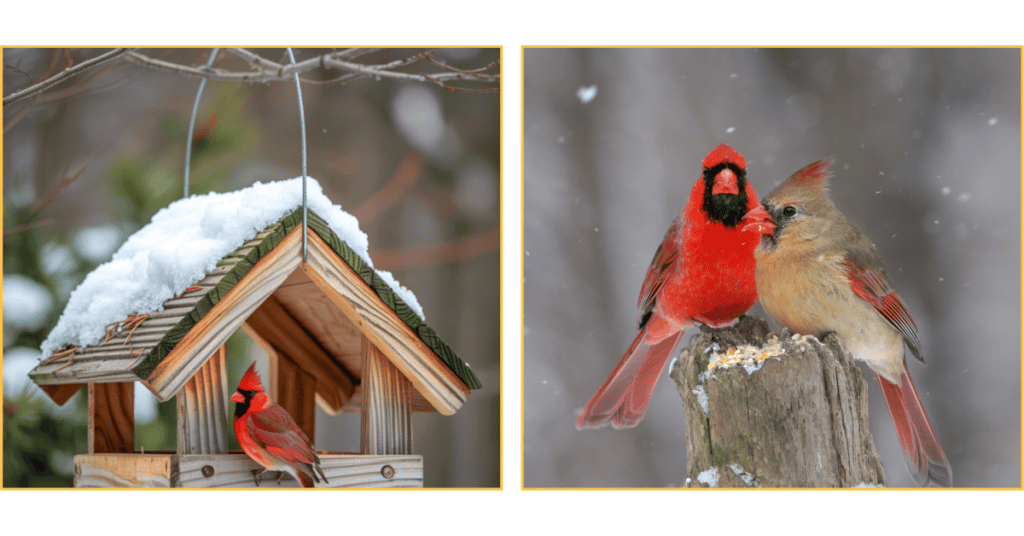
The Northern Cardinal is one of those winter backyard birds everyone loves to spot! Male cardinals are brighter red with a black mask on their face, while females are tan or brown with pretty red touches on their wings and tail.
Cardinals don’t fly south for winter or change their feathers to duller colors. So, keep your eye out for that red bird perched on a branch!
You’ll often spot these birds visiting your backyard during early morning and late evening hours. They’re the official state bird of seven eastern states, which shows just how popular they are.
Yup, both male and female Cardinals have a pointed crest and a cone-shaped, reddish bill. Since their color stands out against the drab winter foliage, they’re easier to recognize.
Cardinals have a cheerful whistling song, and you just might hear it before you spot the bird.
Black-capped Chickadee
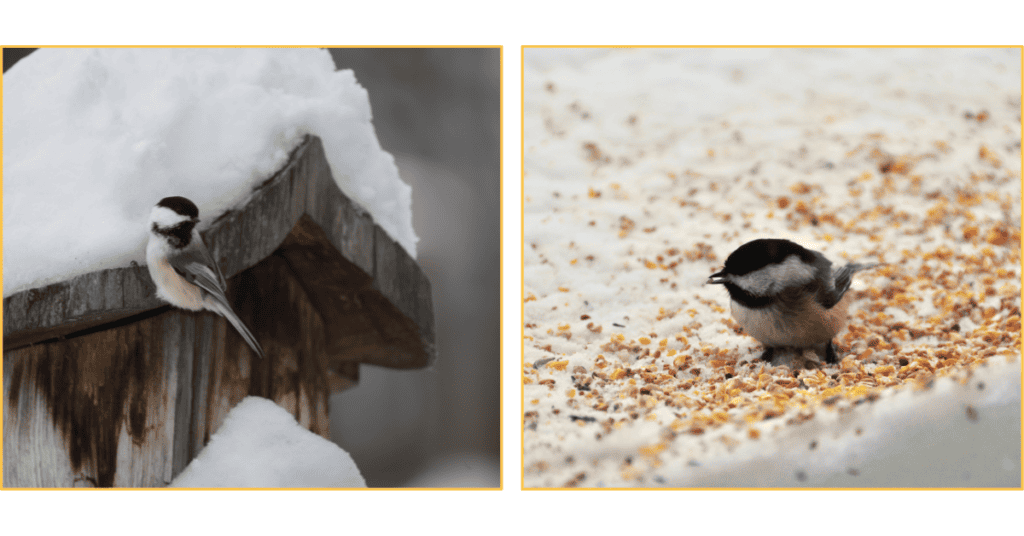
You’ll easily recognize this small bird by its black cap and bib, white cheeks, and gray back. The Black-capped Chickadee weighs only 10-12 grams but stays active all winter long.
These little birds travel in small flocks during the cold months. They often hang out with other species, such as nuthatches and creepers. You’ll hear their friendly “chick-a-dee-dee” call as they move from tree to tree in your yard.
Black-capped Chickadees are smart foragers in winter. They eat seeds, berries, and any food they can find when supplies run low. You’ll often see them at your bird feeders looking for a quick meal.
These birds have amazing ways to survive freezing temperatures. They can lower their body temperature at night to save energy. They also use a special combination of shivering and a slowed metabolism, called torpor, to stay warm. (just like the Anna’s Hummingbird)
If you live in the northern United States or southern Canada, you’ll likely spot these curious little birds. They’re bold and friendly, often checking out humans and new things in their territory.
Blue Jay
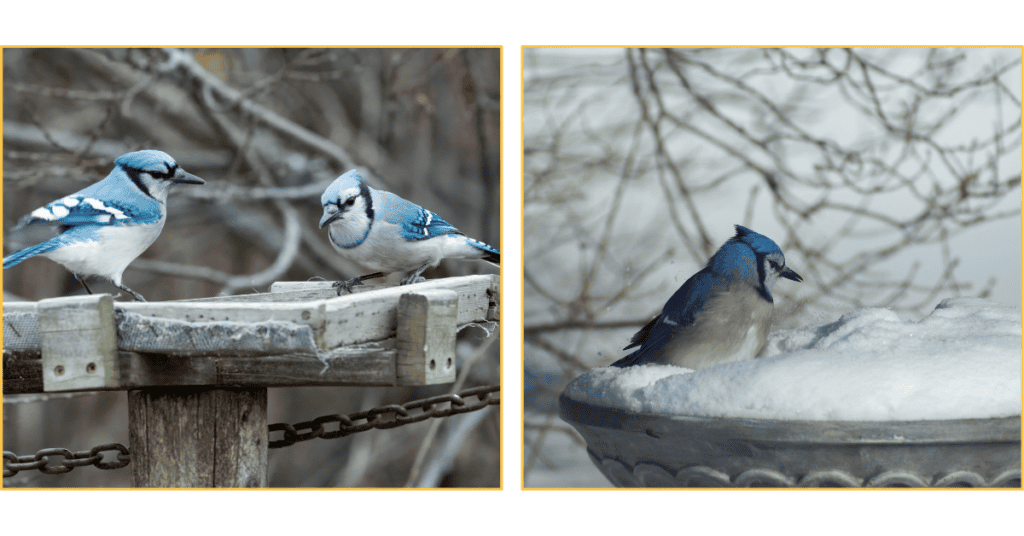
Since Blue Jays are easy to spot, they might be one of the more common ones you see during the cold months, since they stand out.
Most blue jays don’t actually fly south for winter. About 89 percent stay in the same area year-round. You’ll see them searching for food and roosting in dense trees to stay warm at night.
During winter, blue jays change what they eat. They focus on acorns, nuts, seeds, and fruits instead of insects. You can attract them to your yard with the right food.
Blue jays prefer a simple tray feeder or hopper feeder mounted on posts. They love peanuts, sunflower seeds, and suet. Watch out, though, because many folks say that they will bully other birds away from the feeders.
You might notice blue jays making different calls in your yard. They’re known for being loud and sometimes copy the sounds of other birds.
Dark-eyed Junco
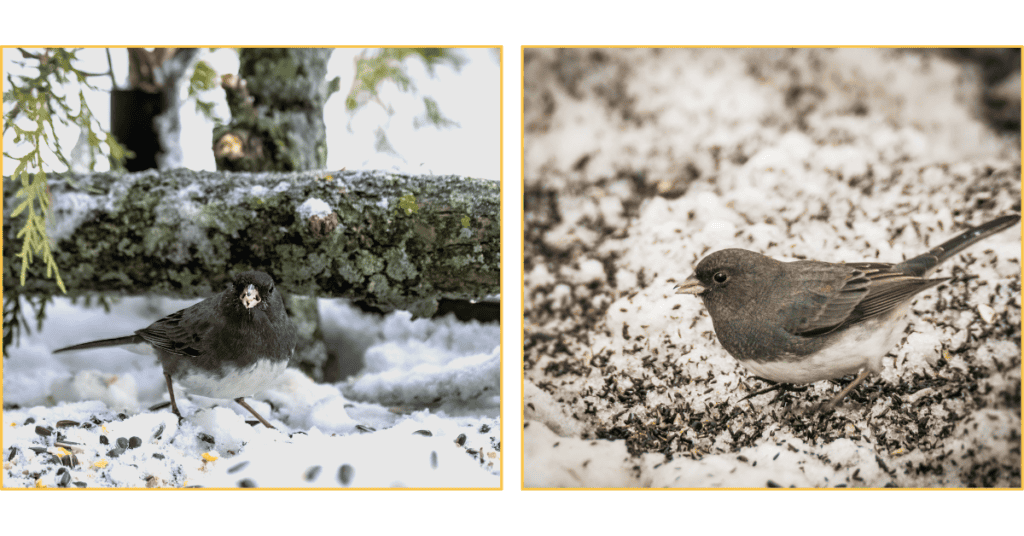
You’ll know winter has arrived when you spot these charming little birds hopping around your yard. Dark-eyed Juncos are small sparrows that many people call “snowbirds” because they show up when cold weather begins.
These birds are easy to recognize. They have neat markings and bright white tail feathers that flash when they fly. You’ll often see them on the ground under your feeders, picking up seeds that other birds have dropped.
Dark-eyed Juncos are one of the most common birds at winter feeders across North America. They spend their summers in the forests of the western mountains and Canada. When winter comes, they spread out across the rest of the continent.
You might notice these birds look different depending on where you live. They have many subspecies with varied coloring, but all share those distinctive white tail feathers.
If you want to attract juncos to your yard, scatter seeds on the ground or use platform feeders. They prefer to feed early in the morning and will visit regularly once they find your feeding station.
Tufted Titmouse
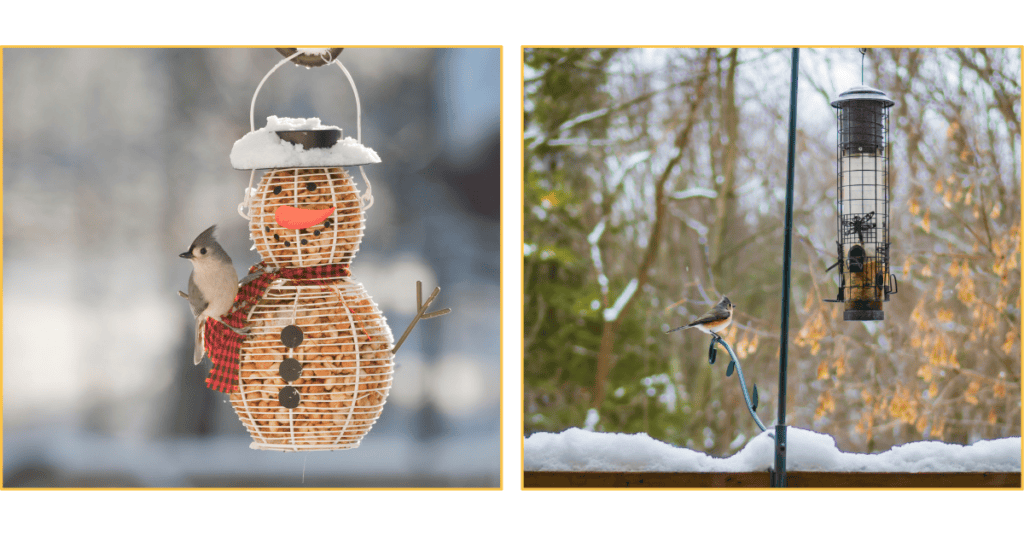
You’ll identify the Tufted Titmouse by its gray crest and soft gray feathers.
These friendly birds love sunflower seeds more than anything else. They’ll also happily eat suet, peanuts, and peanut butter from your feeders. You might even see them grab a seed and fly off to store it for later.
Tufted Titmice often travel in mixed flocks with chickadees and other small songbirds during the winter months. They’re quite social and aren’t shy about visiting backyard feeders regularly.
If you want to attract these birds year-round, consider putting up a nest box. They build their nests in tree cavities, so a properly sized box gives them a perfect home. Even a few tall trees in your yard can provide good habitat for them.
Watch for their acrobatic feeding style as they hop from branch to branch.
Downy Woodpecker
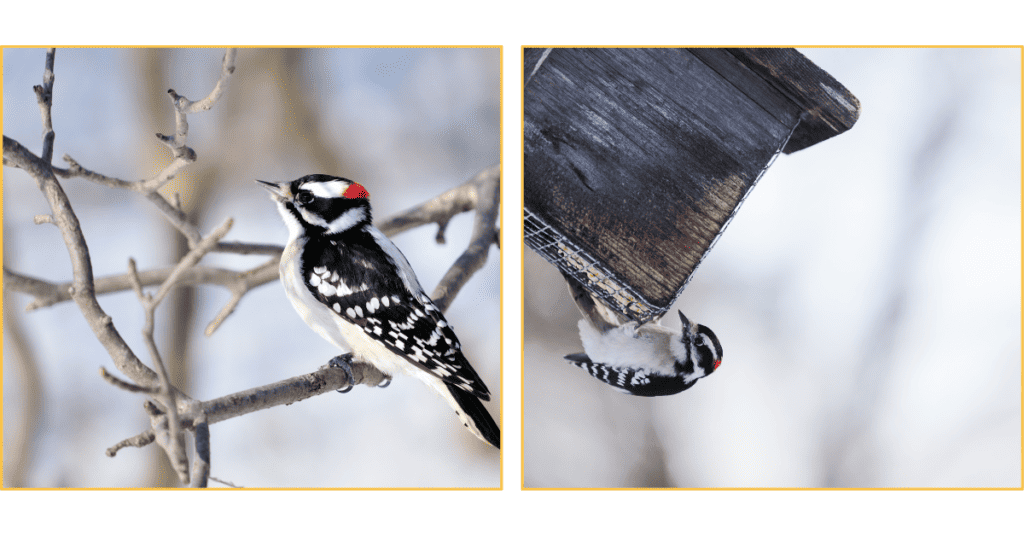
You’ll likely spot the Downy Woodpecker at your backyard feeders throughout winter. This small black-and-white bird is the smallest woodpecker in North America, but it’s not too shy.
Male Downy Woodpeckers have a noticeable bright red patch on the back of their heads. But remember both males and females show tell tale black-and-white stripes and spots on their feathers. They have straight, pointed beaks perfect for finding food.
These little birds are surprisingly comfortable around people. You can attract them to your yard with suet feeders or black oil sunflower seeds. They’re regular visitors and will show up as reliably as your mail carrier.
Downy Woodpeckers often hang out with chickadees and nuthatches during winter. You might see them climbing on small branches or balancing on thin stems. They’re looking for insect larvae that hide under tree bark.
These woodpeckers make soft “pik” calls and a descending rattle sound. They’re active and fun to watch as they move around your yard, hopping from feeder to tree and back again.
White-breasted Nuthatch
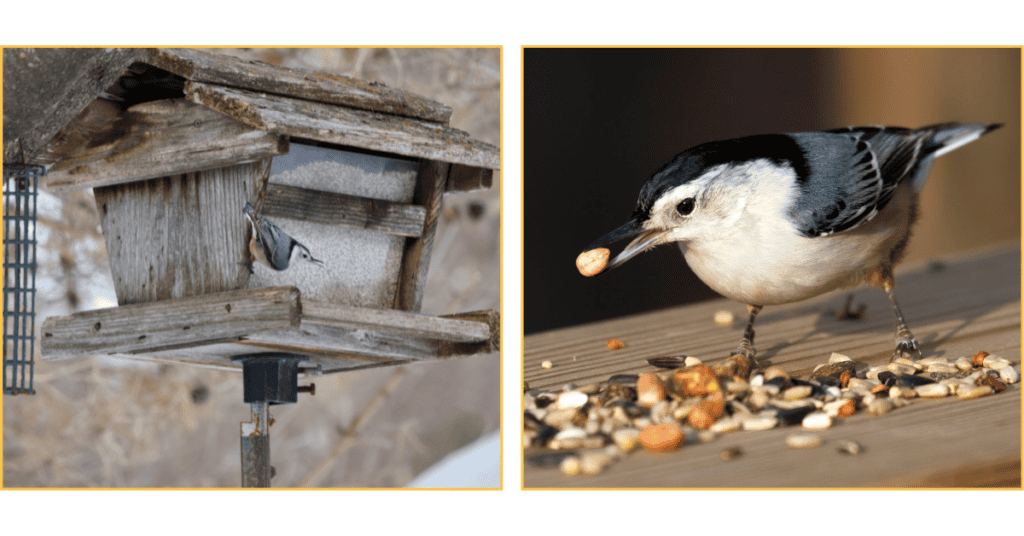
You’ll recognize the White-breasted Nuthatch by its clean black, gray, and white markings. This small bird has a compact body, no visible neck, and a long, pointed bill. Look for its white cheeks and chest paired with blue-gray wings and back.
These active little birds are famous for moving headfirst down tree trunks. They search for insects hiding in the bark, often appearing upside-down as they work. You might also spot them jamming nuts and seeds into tree crevices, then hammering them open with their sharp bills.
White-breasted Nuthatches visit feeders throughout winter. They love sunflower seeds and suet. You’ll often see them grab a seed and fly off to hide it for later.
During colder months, these nuthatches travel in groups with chickadees and titmice. They stay paired with their mates even outside breeding season. Their nasal calls are a common sound in winter woods across North America.
American Goldfinch
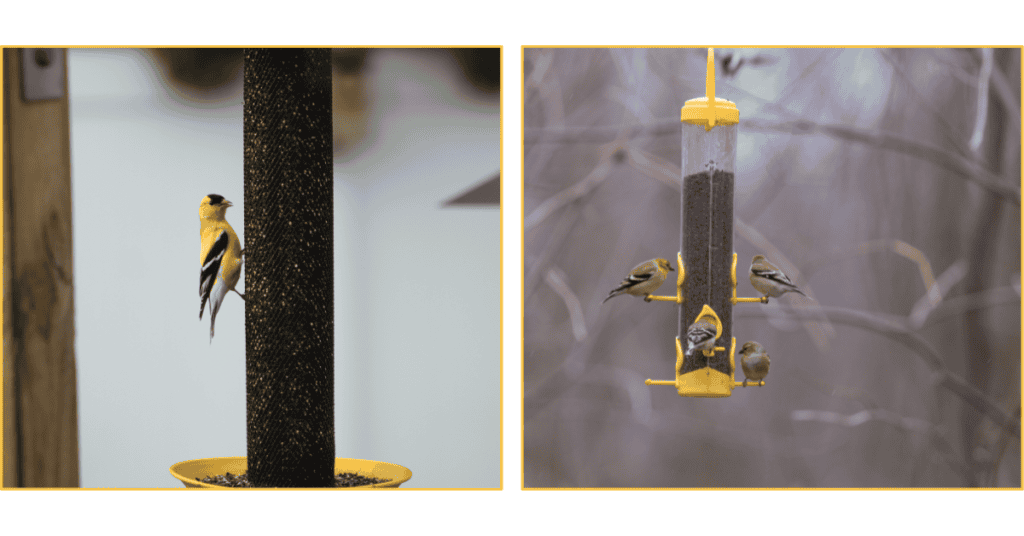
American Goldfinches look quite different in winter than they do during summer. Instead of their bright yellow feathers, they wear drab olive-brown plumage during the cold months. Both males and females have this muted coloring, but you can still identify them by their bold white wing bars on black wings.
These small finches love visiting backyard feeders in winter. They’re acrobatic little birds that often hang upside down while eating. You’ll see them enjoying thistle and sunflower seeds most.
American Goldfinches often travel in flocks during winter. They’re among the most common finches across North America. You can definitely see them at feeders throughout the United States and Canada.
In nature, these birds prefer weedy fields and floodplains where plants like thistles grow. But they also visit backyards, roadsides, and orchards. You’ll have the best chance of attracting them if you offer their favorite seeds in your feeders.
House Finch
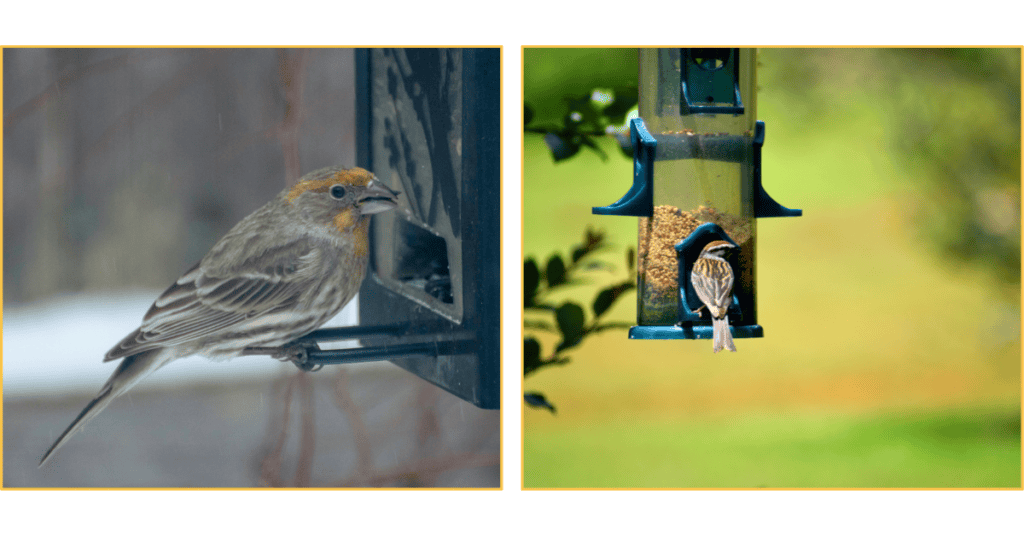
If you have a feeder that you maintain year-round, you’ve probably seen House Finches at your backyard feeder during winter.
Male House Finches are easy to spot with their bright red heads and chests. Females look different with brown streaky feathers and no red coloring. Both have that classic finch shape with a short, cone-shaped bill perfect for cracking seeds.
You’ll often hear them before you see them. House Finches sing long, twittering songs that sound happy and energetic. They’re social birds that usually show up in small groups rather than alone.
These adaptable birds eat mainly seeds at feeders. They especially love sunflower seeds and nyjer seed. You might also catch them eating buds, winter berries, and fruits when available.
House Finches originally lived only in western North America. People introduced them to the eastern United States in the 1940s, and they spread quickly across the continent. Now you can find them in neighborhoods, parks, and backyards almost everywhere. They’ve become one of the most successful backyard birds in winter.
Anna’s Hummingbird
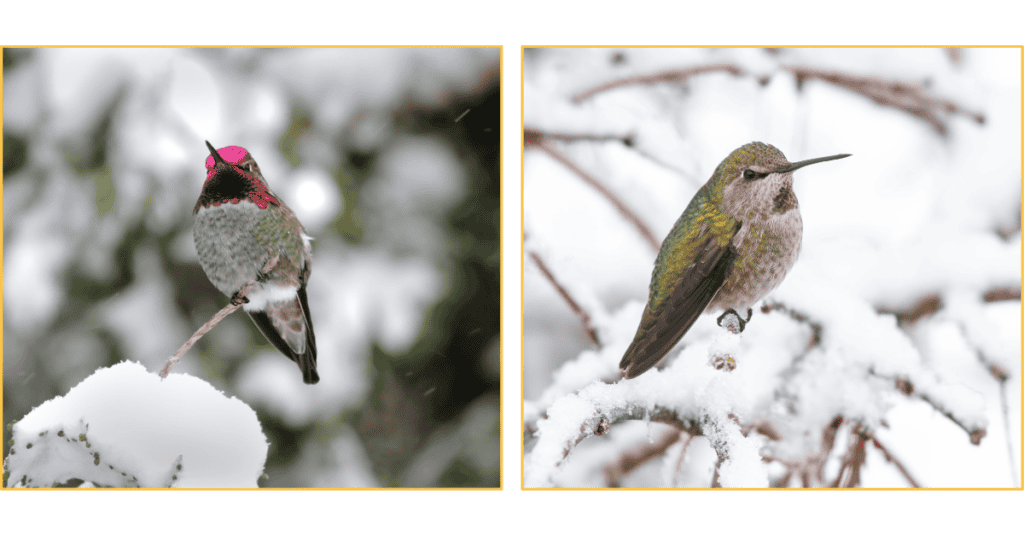
A hummingbird in your backyard during winter? Yup, Anna’s Hummingbird doesn’t follow the usual migration pattern. This small bird stays along the West Coast all year long, making it one of the hardiest hummingbirds in North America.
Anna’s Hummingbird is easy to spot with its shiny green feathers. Males have bright reddish-pink throats and crowns that catch the light.
These birds are more vocal than other hummingbirds. You’ll often hear males making buzzy sounds while they sit on branches.
You can attract Anna’s Hummingbirds to your yard by setting up a feeder. Mix one part sugar with four parts water to make food for them. Don’t add honey or food coloring, as these can harm the birds.
The species has been spreading to new areas in recent years. Backyard feeders and garden flowers have helped them move into places like Idaho and other inland regions. Even during cold winter months, these tough little birds will visit your feeder and guard it from other hummingbirds.
Purple Finch
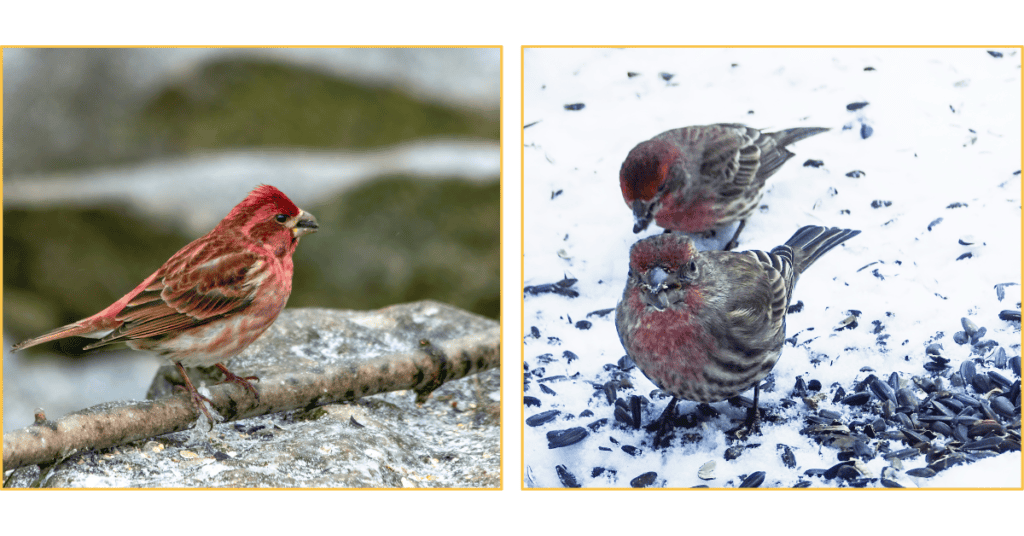
The Purple Finch is a unique bird that might show up at your backyard feeder. Males have a raspberry-red color on their heads, breasts, and backs. Females are brown with streaked undersides and a light eyebrow stripe.
Roger Tory Peterson, the Naturalist, once described these birds as looking like “a sparrow dipped in raspberry juice.” They have chunky bodies and thick beaks that set them apart from other finches.
Purple Finches can be tricky to identify because they look similar to House Finches. You’ll need to look carefully at their features to tell them apart. The Purple Finch has a cleaner, more evenly colored appearance.
These finches don’t regularly visit every backyard. They travel to wherever they can find food, making them special treats when they do appear. Your sunflower seed feeder is a great way to attract them during the winter months.
If you see a large mixed flock with Pine Siskins and American Goldfinches, then study it closely because you might see a Purple Finch mixed in there.
Mourning Dove
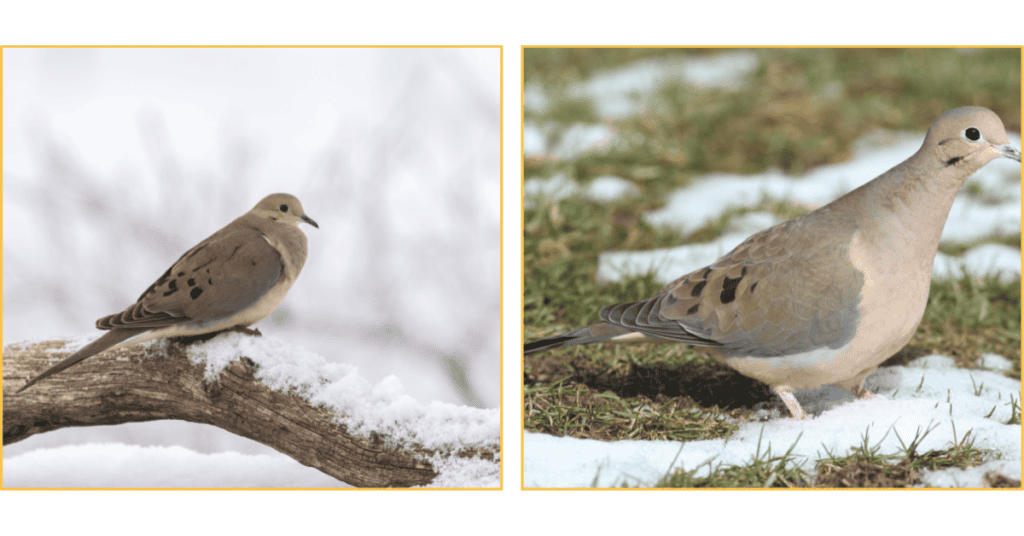
A Mourning Dove will have that quiet, sad-sounding coo that echoes through a neighborhood. These birds have pink legs, and black dots on the wings, small heads and long, pointed tails. These features make them easy to spot on the ground.
I’ve heard people and even some ornithologists say they can’t stand the constant cooing of these birds, but I like it.
Mourning Doves are super common and you’ll see at your feeders during winter. They prefer to eat seeds on the ground rather than perching at elevated feeders. One unique feature is that their wings make a whistling sound when they take off.
Migrating south is not their thing, so you’ll see them year-round. During cold winter nights, they sleep in dense evergreen trees that protect them from harsh weather and predators.
You can attract Morning Doves by scattering seeds on the ground near your feeders, but be careful becaue this can attract other pests. Giving them a water source low to the ground is also helpful.
Identifying Winter Birds by Behavior
Winter birds show distinct patterns in how they eat and communicate. These behaviors help you identify which species are visiting your yard, even when they’re far away or partly hidden.
Common Feeding Habits
Different birds have their own ways of finding and eating food during winter. Cardinals and grosbeaks crack open seeds with their strong beaks right at the feeder. Chickadees grab a single seed and fly to a nearby branch to eat it in safety.
Ground feeders like Juncos, Mourning Doves, and Sparrows hop around below your feeders looking for dropped seeds. They scratch at the snow with both feet at once, jumping backward to uncover food. Woodpeckers cling to tree bark and suet feeders, using their stiff tail feathers for support.
Nuthatches walk headfirst down tree trunks, searching for insects in the bark. This upside-down movement is unique to them. Blue jays often act bossy at feeders, chasing smaller birds away and stuffing multiple seeds in their throat to hide later.
Watch for birds that visit feeders in groups versus those that come alone. Goldfinches feed together peacefully, while cardinals usually show up in pairs.
Winter Bird Sounds and Calls
Birds will make fewer sounds in winter to save energy. You’ll hear shorter, simpler calls instead of the long songs they use in spring. These shorter calls may be harder to identify. Cardinals still whistle clearly on sunny winter days, though less often than in warmer months.
Woodpeckers drum on trees and metal surfaces to mark territory even in cold weather. Listen early in the morning, when birds are most active and vocal, especially after storms pass.